
Copper Protection Bracelet: Meaning, Materials and How to Choose
What does a copper protection bracelet mean to you? Its significance need not rest on a promise of physical or medical protection. Copper’s warm appearance can make a bracelet feel like a personal talisman, a quiet reminder of resilience, mindfulness, or a value you want close each day.
It’s understandable to be drawn to the language of protection, especially when product descriptions blur symbolic meaning with claims about health or guaranteed effects. A thoughtful choice starts with clarity: treat the bracelet as adornment with personal significance, not as a medical device or a proven shield.
This guide explains what copper protection bracelets may symbolize and what to check before buying, including material disclosures, craftsmanship, fit, comfort, and care. It also covers what to do when a listing leaves important details unanswered. ZAAFAR Atelier’s handmade, spiritually inspired Midline Copper Bracelet - Minimalist Protection Talisman is one example of jewelry created with intention. The right choice, however, depends on your own style and the meaning you want the piece to carry.
Key Takeaways
- Understand how a copper protection bracelet can express personal intention without treating symbolic meaning as proof of protection.
- Compare listings by checking whether materials, fit, construction, and return terms are clearly disclosed.
- Use a simple sequence to choose a bracelet: clarify what you want it to represent, verify product details, assess fit, and review care guidance.
- Separate verifiable specifications from subjective words such as “healing” or “energizing” when assessing product claims.
- Explore how the Midline Copper Bracelet - Minimalist Protection Talisman is positioned as meaningful adornment, and consider whether its design resonates with you.
What Does a Copper Protection Bracelet Mean?
A copper protection bracelet is adornment that someone may wear for personal meaning or intention. It might represent a private belief, remind the wearer of a value, or simply have a grounding quality for them. “Protection” describes the symbolism a wearer or maker gives the bracelet; it does not establish that the piece can prevent harm.
That meaning isn’t universal. Personal beliefs, family practices, and cultural traditions can all shape how someone understands talisman jewelry. Unless a particular tradition is reliably documented, avoid assigning one fixed meaning to copper or assuming every wearer shares the same interpretation.
Symbolic protection versus a proven protective effect
A bracelet can serve as a visible reminder to pause, reconnect with an intention, or express a spiritual belief. That personal role can matter without being a measurable effect of the metal. Symbolic protection isn’t evidence of medical benefit or guaranteed physical safety. A bracelet shouldn’t be relied on to prevent illness, injury, negative energy, or external events.
A talisman can carry personal meaning; an evidence-backed protective device must demonstrate a specific protective effect. Keeping the distinction clear lets you value symbolism without mistaking it for scientific proof.
Why people choose copper talisman jewelry
People may choose a copper bracelet for its warm appearance, how it complements their style, or the intention they associate with wearing it. These reasons can coexist, but none is the one correct explanation. Copper is a material used in jewelry; a source overview of the properties of copper can help you understand the element without turning its material characteristics into health or spiritual claims.
Consider what the piece means to you. It might mark a personal commitment, prompt a moment of reflection when you notice it, or simply feel beautiful on your wrist. A thoughtful approach to mindfulness jewelry and intentional adornment can help you explore these choices while leaving room for your own beliefs. The meaning belongs to the wearer, not to a promise the bracelet can’t substantiate.
Copper in Protection Jewelry: Material, History, and Meaning
Copper has a distinctive presence in jewelry, but the word “copper” alone doesn’t tell you exactly what a bracelet is made from. A listing may describe solid copper, a copper alloy, a surface coating, or a design combining copper with other materials. These distinctions matter when you’re choosing a piece for its appearance, expected wear, or personal significance.
Documented facts about copper describe its physical and biological properties; spiritual meanings are interpretations shaped by people and traditions. The National Institutes of Health describes copper as an essential mineral for the body, but that does not establish that wearing a copper bracelet provides a health benefit or supplies copper through the skin. Keep material science separate from spiritual belief.
What to verify about copper jewelry materials
Before buying, look for specific disclosures rather than relying on a product title or evocative words such as “pure” or “natural.” Check whether the seller identifies the metal’s composition, any coating or plating, and other materials in the piece. Copper jewelry can change in appearance over time, and contact with moisture or skin may contribute to tarnish or temporary green discoloration. If material details or care guidance are missing, ask the maker before deciding.
How cultural meaning can shape a copper talisman
There isn’t one universal meaning for copper talismans. A symbol may carry significance within a particular community or tradition, while another wearer may choose the same bracelet for its color, form, or private intention. Attribute specific cultural associations to reliable sources and the tradition they describe, rather than presenting them as beliefs shared by everyone. The copper talisman bracelet guide offers broader context for exploring symbolism alongside artisan craft.
Let the listing answer practical questions and your own beliefs guide what the piece means to you. If the description leaves composition or care unclear, seek clarification instead of treating symbolic language as a material specification. For another perspective on intentional adornment, explore ZAAFAR’s spiritually inspired jewelry.
How to Compare Copper Protection Bracelets Before Buying
A polished listing can make a bracelet feel meaningful, but a sound buying decision depends on details you can verify. Compare each copper protection bracelet using the same questions: What materials are disclosed? How is the fit described? What construction information is provided? What do the return terms say? Clear answers help you judge whether a piece suits your needs. “Handmade” alone, however, doesn’t guarantee a particular level of quality.
Questions to ask about materials and craftsmanship
Look for named materials, finishes, and additional components. Construction details might explain how parts are joined or how a closure works. Broad phrases such as “artisan quality” express a value, but don’t tell you what the piece is made from or how it is assembled. Claims about a specific craft tradition or technique should be supported by product-specific information. For wider context, Britannica outlines the history of copper in decorative arts, but that general history isn’t proof of how an individual bracelet was made.
Comfort, sizing, and everyday wear
Check for dimensions, closure details, and fit guidance. Then consider how the design will feel during your usual activities and alongside your clothing. If a listing leaves fit or care questions unanswered, ask the seller before buying. Don’t assume a bracelet is adjustable, durable, or water-resistant unless those details are stated.
| What to compare | Look for verifiable details | Read with care |
|---|---|---|
| Materials | Copper content, coatings or finishes, and other components | “Pure,” “natural,” or “healing” without supporting specifications |
| Fit | Measurements, closure type, and clear fit guidance | “One size fits all” without dimensions or explanation |
| Construction | Specific information about assembly, components, or technique | General claims of artisan quality without product details |
| Returns | Written return terms, including conditions and time limits | Assumptions based on marketplace norms or vague wording |
Separate product facts from subjective language. “Copper with a stated coating” is a material claim you can verify; “protective,” “healing,” and “energizing” describe interpretations, not measurable specifications. Clear disclosures make comparison easier. Missing information is a reason to pause, not fill in the gaps yourself.
If you’re looking for considered, spiritually inspired adornment, explore ZAAFAR Atelier’s Midline Copper Bracelet - Minimalist Protection Talisman. Its talisman positioning is symbolic, not a promise of physical or medical protection.
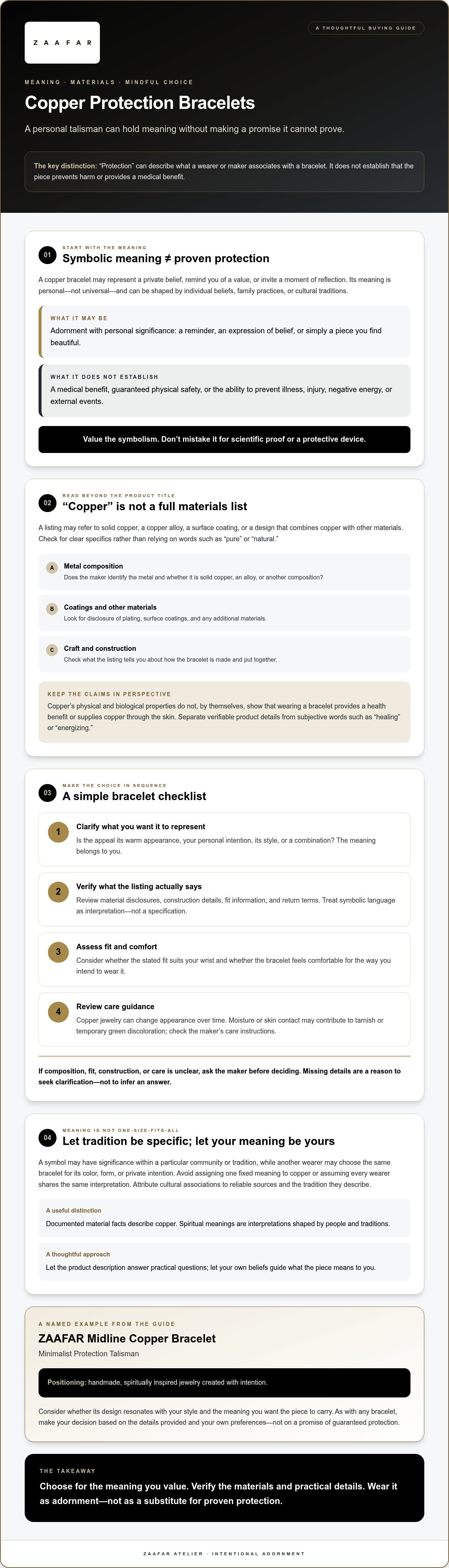
How to Choose and Care for a Copper Protection Bracelet
Choose with intention, then let practical details guide your decision. A copper protection bracelet may feel personal because of the meaning you give it, while comfort and care depend on the individual piece. Use four checks: clarify your intention, verify product facts, assess fit, and read the maker’s care guidance before wearing it regularly.
A practical checklist for a considered purchase
Start by deciding what you want the bracelet to represent, if anything. It might remind you of a personal value, or you may simply love its design. There’s no required belief or interpretation. Before ordering, confirm the listing’s materials, measurements, closure, and seller policies. Treat words such as “protective” as symbolic unless a specific claim is supported by credible evidence.
- Intention: Does the symbolism or appearance feel right to you?
- Product facts: Are materials and construction described clearly?
- Fit: Can you assess the measurements and closure against your comfort preferences?
- Care: Does the maker explain how to look after this specific finish?
Copper bracelet care and skin considerations
Care depends on a bracelet’s composition and finish, so don’t assume one cleaning method suits every piece. Follow the maker’s instructions and ask for guidance if none is provided. Copper jewelry may leave a green mark on the skin, particularly with moisture or contact that encourages tarnishing. This discoloration is generally harmless, but it is different from irritation. Remove the bracelet if your skin becomes irritated, and seek appropriate professional advice rather than trying to diagnose or treat the reaction yourself.
For everyday wear, consider your routine as well as the look. A bracelet that feels meaningful should also sit comfortably with your clothing and daily activities. If you’re unsure whether the design or care requirements suit you, clarify those details with the seller before adding it to your regular rotation.
For a piece presented as intentional adornment, explore the Midline Copper Bracelet - Minimalist Protection Talisman from ZAAFAR Atelier. Consider its symbolism alongside the product details and care guidance available to you.
The ZAAFAR Midline Copper Bracelet as a Minimalist Protection Talisman
The Midline Copper Bracelet - Minimalist Protection Talisman brings the language of talismans into ZAAFAR Atelier’s jewelry offering. Its name signals an intended connection with protection, but that positioning is best understood symbolically. You might treat the bracelet as a personal reminder of an intention or belief. It shouldn’t be taken as a promise of physical safety, medical benefit, or guaranteed spiritual protection.
What the bracelet represents within ZAAFAR's design world
A talisman’s meaning can be personal. You might associate a piece with resilience, mindfulness, or a moment of change, while another wearer may simply appreciate its aesthetic. The meaning belongs to the person wearing it rather than being fixed for everyone.
“Minimalist” describes the product’s stated positioning, not a specific shape, finish, or construction detail. ZAAFAR, founded and designed by Saadia Zaafar, has roots in Hamburg and Pakistan. The brand describes its jewelry as handmade and spiritually inspired, and supports South Asian master craftsmen. That wider approach gives context for the bracelet’s place within the brand, but doesn’t verify a particular technique or material specification for this piece.
Explore the bracelet with clear expectations
Before deciding whether it suits your style and intention, review the current product listing for practical details. Confirm the copper composition and any other materials, available fit information, care guidance, and current availability. If a detail you need isn’t provided, seek clarification rather than assuming the bracelet is pure copper, adjustable, or made with a particular process.
Approach the piece as considered adornment. Its symbolism may be meaningful to you, while its product details help you decide whether it suits everyday wear. This balance leaves room for personal belief without confusing an evocative name with evidence of protection.
If its talisman positioning and minimalist approach resonate with your style, Explore ZAAFAR's jewelry and review the current product information before purchase.
Choose a Bracelet That Reflects Your Intention
A copper protection bracelet can be meaningful as personal adornment, but symbolic meaning isn’t proof of medical benefit or physical protection. Let your intention shape what the piece represents, then check practical details before buying: materials, fit, construction, care guidance, and seller policies.
ZAAFAR Atelier’s Midline Copper Bracelet - Minimalist Protection Talisman reflects a talisman-inspired approach to jewelry as personal expression rather than a guarantee of protection. Founded and designed by Saadia Zaafar, ZAAFAR describes its jewelry as handmade and spiritually inspired. Review the current product information to see whether its details suit your expectations and everyday wear.
If the bracelet’s symbolism and design speak to you, Explore ZAAFAR's jewelry. Choose with care, and let the meaning you bring to a piece make it your own.
Frequently Asked Questions
Does a copper protection bracelet really protect you?
No. A copper protection bracelet may serve as a personal talisman or reminder, but it isn’t proven to prevent injury, illness, or other external events. “Protection” describes a symbolic intention, not a guaranteed effect. You can value what a bracelet means to you while keeping practical safety measures separate. Choose a piece for its meaning or appearance, not as a substitute for protection you can verify.
What does wearing a copper bracelet symbolize?
Its meaning depends on the wearer and, where relevant, a particular cultural or spiritual tradition. Someone might use a copper bracelet as a reminder of an intention or personal value; another person may simply appreciate its color and design. There’s no single meaning shared by every wearer. Treat symbolism as personal unless a specific cultural association is reliably documented and clearly attributed to that tradition.
Can a copper bracelet improve health or relieve pain?
There’s no convincing evidence that wearing a copper bracelet relieves arthritis pain or treats another health condition. A 2013 study found no meaningful therapeutic effect for rheumatoid arthritis. Copper is an essential nutrient, but wearing jewelry isn’t an established way to obtain it through the skin. If you’re considering a bracelet for pain or a health concern, don’t use it instead of appropriate medical care.
How can you tell whether a copper bracelet is really copper?
You can’t reliably confirm a bracelet’s composition just by looking at its color. Read the product description for the stated metal content, coatings or plating, and any other materials. A copper-colored finish doesn’t prove the item is solid copper or made from a particular alloy. If the listing is unclear, ask the seller or maker for specific material information before you buy.
Can a copper bracelet leave a mark on your skin?
Yes. Copper jewelry may leave a green mark on the skin, particularly when moisture and contact encourage a surface reaction. This discoloration is generally harmless and doesn’t by itself prove a health benefit or serious problem. Skin irritation is different: remove the bracelet if irritation occurs, and seek appropriate professional advice if you’re concerned. Follow the maker’s care guidance, since finishes and materials can vary.
How should you choose a copper protection bracelet for daily wear?
Choose a copper protection bracelet by first deciding what, if anything, you want it to symbolize. Then check the stated materials, measurements, closure, care instructions, and seller policies. Consider whether the fit and design suit your routine, clothing, and comfort preferences. Treat claims such as “healing” or “protective” as symbolic unless they have credible evidence. Clear product details make it easier to choose a piece you’ll enjoy wearing.