
Handmade Spiritual Jewelry: Meaning, Craft, and How to Choose
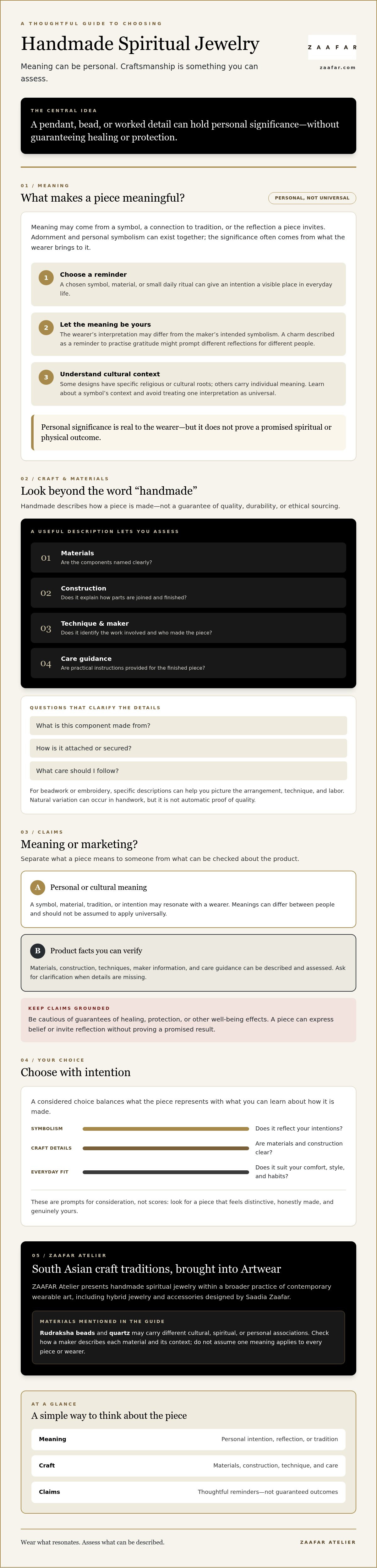
What gives handmade spiritual jewelry meaning may be less what a symbol promises and more what it reminds you to carry. A pendant, bead, or carefully worked detail can hold personal significance without guaranteeing healing or protection.
If you’re drawn to spiritual adornment, you may want more than a beautiful design. You want to know whether its symbolism resonates with your beliefs, whether the materials and handwork are clearly described, and whether the maker’s claims feel grounded. Meaning is personal, while craftsmanship is something you can assess.
This guide will help you compare materials, construction, and the story behind a piece, and choose symbolism that reflects your intentions. You’ll also learn to distinguish a thoughtful reminder from an overstated well-being claim. From South Asian craft traditions to contemporary wearable art, look for a piece that feels distinctive, honestly made, and genuinely yours.
Key Takeaways
- Handmade spiritual jewelry combines adornment with personal symbolism; the meaning may come from your own intention.
- Look beyond the word “handmade” by checking whether materials, construction, and care guidance are clearly described.
- Separate personal or cultural meaning from product facts you can verify, and be cautious of promises of guaranteed well-being effects.
- Choose a piece by considering its symbolism, comfort, personal style, and fit with your everyday habits.
- Discover how ZAAFAR Atelier brings South Asian craft traditions into Artwear, including hybrid jewelry and accessories designed by Saadia Zaafar.
What Is Handmade Spiritual Jewelry and What Makes It Meaningful?
In brief: Handmade spiritual jewelry is adornment shaped by human craft, symbolism, and personal intention. A piece may be valued for its design, its connection to a tradition, or the reflection it invites. These meanings can exist together.
Unlike jewelry chosen mainly to complement an outfit, spiritual jewelry often carries a symbol, material, or story the wearer considers meaningful. The categories aren’t opposites, though: a necklace can be striking decoration and a personal reminder at once. The difference lies less in appearance than in the significance someone brings to wearing it.
Some pieces draw on religious or cultural symbols; others use forms or materials that a wearer privately associates with a value or intention. An amulet, for example, has a long history across cultures and religions, often associated with protection. That context can help explain a design, but it doesn’t establish one universal meaning for every wearer or object.
A piece can hold deep personal meaning without guaranteeing a spiritual or physical effect. This distinction makes room for sincere symbolism while keeping claims grounded. The object may express belief or prompt reflection, rather than prove a promised outcome.
How Does Jewelry Become a Personal Spiritual Reminder?
A chosen symbol, material, or small daily ritual can give an intention a visible place in everyday life. You might pause when fastening a bracelet, touch a pendant before a difficult conversation, or use a familiar shape to return your attention to what matters. The practice is personal, not automatic.
The wearer’s interpretation may differ from the maker’s intended symbolism. ZAAFAR Atelier, for instance, describes its pieces as charms that can remind wearers to practise gratitude. For one person, that might mean noticing a kindness; for another, appreciating a quiet moment. The meaning grows through the wearer’s attention.
Is Handmade Spiritual Jewelry Tied to One Belief System?
No single belief system defines the whole category. Some designs have specific religious or cultural roots, while others hold individual meaning without belonging to a shared tradition. Before wearing a symbol tied to a community, take time to understand its context and listen to sources connected to that tradition. Avoid assuming your interpretation is universal or authoritative.
That care doesn’t diminish personal connection. It helps you choose with respect, understanding, and a clearer sense of what the piece means to you.
How Craftsmanship and Materials Shape Handmade Spiritual Jewelry
“Handmade” describes how a piece is made, not a guarantee of quality, durability, or ethical sourcing. A useful description helps you understand what you’re considering: the materials, how parts are joined, which techniques are used, and how to care for the finished piece. Jewelry has long reflected materials and traditions from different cultures, as the history of jewelry makes clear. That context can enrich your appreciation, but each item still deserves a close look on its own.
Artisan provenance is a clear account of who made a piece, which techniques shaped it, and what materials it contains. The more specific that account, the better you can assess the work behind the design.
What Details Reveal the Maker’s Hand?
Look for details about assembly, finishing, and the people involved, not just a general claim that a piece is handcrafted. For beadwork, a useful description might explain how the beads are arranged or secured. For hand embroidery, it might identify the technique and describe where the embroidered work appears. Such information helps you picture the labor and construction. Variation can be natural in handwork, but it isn’t automatic proof of quality. Uneven finishing or insecure components are reasons to ask questions.
Before choosing, check whether the product page names each material clearly, explains construction, and gives practical care guidance. If a detail is missing, ask the brand instead of assuming. What is the component made from? How is it attached? What care should I follow? Clear answers let you compare pieces on substance, not imagery alone.
What Can Rudraksha and Quartz Represent in Jewelry?
Rudraksha beads and quartz are among the intentional materials used in spiritual design, including work associated with ZAAFAR Atelier. People may encounter these materials with different cultural, spiritual, or personal associations, so don’t assume one meaning applies to every piece or wearer. Check how the maker describes the material and its context, then consider whether that meaning resonates with you.
A material may be chosen for its appearance, traditional significance, or the reminder it holds for an individual. None of those meanings proves a medical, psychological, or supernatural effect. Treat promises of guaranteed outcomes separately from verifiable details about what a piece is made from and how it’s constructed.
For a concrete example of craft meeting contemporary design, explore ZAAFAR Atelier’s handmade Artwear, which brings together jewelry and accessories with South Asian craft traditions.
Meaning or Marketing? How to Assess Spiritual Jewelry Claims
A piece of jewelry doesn’t need to prove a supernatural effect to matter. Its symbolism may offer a meaningful focus for reflection, belonging, or remembrance, even when that meaning isn’t something a product description can verify. Historical examples show how motifs have carried layered meanings: the Goldstein Museum of Design explores symbolism in jewelry, including natural and celestial imagery.
When reading a description, separate what the piece means to someone from what can be established about it. These are different kinds of information, and each deserves consideration.
| Type of claim | What it tells you | What to check |
|---|---|---|
| Personal symbolism | A wearer connects a design with an intention, memory, or value. | Does the maker present this as a personal interpretation rather than a guaranteed outcome? |
| Cultural context | A symbol or material may have significance within a particular tradition or community. | Is the tradition named and its meaning described with care, rather than treated as universal? |
| Verifiable product facts | Details about materials, construction, and the making process. | Are these details specific enough to understand or confirm? |
Broad promises deserve a closer look. “Designed as a reminder of gratitude” describes an intention a wearer can engage with; “guarantees protection” claims an outcome. A clear description explains what a symbol means to the maker or in a stated context, while distinguishing that interpretation from facts about the object.
Can Spiritual Jewelry Protect or Heal the Wearer?
Some wearers associate particular jewelry with protection, comfort, or spiritual practice. Those beliefs and traditions can be meaningful, but they aren’t the same as evidence-based medical or safety claims. Jewelry shouldn’t replace professional care, prescribed treatment, or practical safety measures. A piece may accompany a personal practice, but it can’t promise a specific physical or supernatural result.
Questions to Ask Before Trusting a Spiritual Jewelry Description
Pause over the wording and ask:
- Is the symbolism explained with cultural context, or presented as one meaning for everyone?
- Does the description identify materials, techniques, and the maker or making process clearly?
- Are well-being statements framed as beliefs and intentions, or as outcomes guaranteed to every wearer?
If a description promises healing or protection, ask what supports that claim and whether the seller can distinguish symbolic meaning from verifiable product information. A thoughtful answer respects belief without overstating what the jewelry can do. That balance lets you appreciate the piece on your own terms, with clarity about both its story and its limits.
How to Choose and Wear Handmade Spiritual Jewelry with Intention
Start with what you want a piece to mean, then consider practical details: how it’s made, what it’s made from, and whether it suits your life. Use this five-step process to choose handmade spiritual jewelry that feels personal and comfortable, without relying on a one-size-fits-all idea of meaning.
- Clarify your intention. Name a quality, memory, or reflection you’d like the piece to bring to mind, such as gratitude or courage.
- Explore the symbolism. Read how the maker explains the design, then consider whether that meaning aligns with your beliefs and associations.
- Inspect the craft. Look for clear descriptions of the technique, construction, and finishing. Ask about details that aren’t explained.
- Confirm the materials. Check that the materials are named specifically and that care guidance is available.
- Consider how you’ll wear it. Think about comfort, sizing, fastening, occasion, and whether the piece suits your style and daily habits.
How Can You Find a Piece That Feels Personally Meaningful?
Begin with a simple question: What would I like this piece to help me remember? You might choose a design because its form recalls someone you love, or because wearing it gives you a moment to pause. Compare the maker’s stated symbolism with your own associations. They can differ, and that’s okay, as long as you understand any cultural context and choose respectfully. No single stone, symbol, or practice is right for everyone.
For more on the role of intention in personal adornment, continue with Mindfulness Jewelry: The Ultimate Guide to Intentional Adornment in 2026.
How Should You Care for Handmade Spiritual Jewelry?
Materials and construction vary, so follow the maker’s care instructions rather than assuming all beads, stones, or finishes respond alike. Before ordering, look for guidance on storage and exposure to water, fragrance, or other products. If instructions are missing, ask what conditions to avoid. Store the piece thoughtfully so it won’t tangle, knock against other items, or face conditions the maker advises against.
Before deciding, confirm sizing and fastening details, review material disclosures, and consider when and how you’ll wear the piece. A necklace intended for occasional use may suit different habits than an item you hope to wear every day. Let meaning guide the choice, and let comfort and care determine whether it works in practice.
Explore ZAAFAR Atelier’s jewelry and accessories as you consider pieces that bring personal intention into your style.
How ZAAFAR Atelier Brings Handmade Spiritual Jewelry into Artwear
ZAAFAR Atelier is a brand based in Hamburg and Pakistan, founded and designed by Saadia Zaafar. Its Artwear category brings jewelry and accessories together as hybrid pieces, joining contemporary design with South Asian craft traditions. The result sits between adornment and wearable art, with meaning expressed through materials, technique, and the wearer’s own interpretation.
The brand’s design approach includes intentional materials such as Rudraksha beads and quartz, alongside traditional hand embroidery created with South Asian master craftsmen. ZAAFAR Atelier also uses a patented technique to create hybrid jewelry. These details offer a starting point for understanding the making behind a piece. Check individual product descriptions for exact materials and construction.
What Makes ZAAFAR’s Approach Distinctive?
ZAAFAR Atelier brings craft, material, and contemporary form together rather than treating handmade spiritual jewelry as a symbol alone. Its work with South Asian master craftsmen connects the pieces to skilled makers and craft traditions, without reducing that work to an unsupported impact claim. The patented technique is part of the brand’s approach to hybrid jewelry. Its significance is best understood through the designs and details the brand shares, rather than assumptions about how the technique works.
For more context on the cultural roots and contemporary expression of these influences, read South Asian Inspired Jewelry: Ancient Roots, Modern Soul. As you explore, consider both the maker’s explanation and what the design means to you.
Explore Handmade Pieces That Reflect Your Own Intention
ZAAFAR Atelier offers bracelets, necklaces, rings, and Artwear accessories. A Jacquard Weave Bracelet, Whispering Chains Necklace, or Feroza Bead Ring can illustrate the range of forms available, but don’t infer a specific material or spiritual meaning from a product name alone. Check each item’s description for confirmed details, then consider whether its shape, scale, and intended use fit your style and routine.
The brand describes its pieces as charms that can remind wearers to practise gratitude. That is an invitation to create a personal moment of reflection, not a promise of a particular effect. You might connect a piece with a small daily pause or simply wear it because its craftsmanship and design resonate.
Explore ZAAFAR Atelier’s handmade jewelry and Artwear at your own pace, and look for a piece whose story and presence feel right for you.
Choose a Piece That Reflects What Matters to You
The right handmade spiritual jewelry brings personal meaning and thoughtful design together. Let your intention guide the choice, then look for clear details about materials and craftsmanship. A symbol can prompt meaningful reflection without promising a guaranteed effect.
That balance of artistry and intention informs ZAAFAR Atelier, founded and designed by Saadia Zaafar. The brand combines South Asian craft with a patented technique and intentional materials, including Rudraksha beads and quartz. Its work with South Asian master craftsmen and traditional hand embroidery honors the skill behind each piece, while its gratitude reminder concept leaves room for the wearer’s own interpretation.
Explore the designs at your own pace. Explore ZAAFAR Atelier’s handmade jewelry and Artwear to discover pieces shaped by craft and personal meaning. Choose what resonates with your beliefs, your style, and the intention you want to carry forward.
Frequently Asked Questions
What is handmade spiritual jewelry?
Handmade spiritual jewelry is artisan-made adornment that carries symbolism or personal intention. It may draw on a cultural or religious tradition, natural materials, or an individual reason for wearing it, such as remembering a value or meaningful moment. “Handmade” describes the making process, not proof of quality, ethical sourcing, or spiritual effects. Check whether the description identifies the maker, materials, and techniques clearly.
Can spiritual jewelry protect or heal you?
Some wearers and traditions associate particular symbols or materials with protection, reflection, or well-being, but these associations don’t guarantee physical or supernatural outcomes. A piece may serve as a personal reminder or accompany a spiritual practice. It shouldn’t replace medical advice, mental-health care, treatment, or practical safety measures. If a product description promises a definite healing or protective result, treat that as a claim to question rather than an established effect.
How can you tell if handmade jewelry is well made?
Look for a specific account of the materials, construction, finishing, and techniques used. Clear care instructions and information about who made the piece can also help you assess its craftsmanship. Handmade work may show individual variation, but that alone doesn’t establish quality or durability. Check whether components appear securely joined and the finishing looks intentional. If the description leaves an important detail unclear, ask the maker before you buy.
What materials are commonly used in spiritual jewelry?
Spiritual designs may include beads, gemstones, metals, or other materials selected for their appearance, traditional associations, or personal meaning. Rudraksha beads and quartz, for example, are used in some intentional jewelry designs, including ZAAFAR Atelier’s Artwear. Their associations aren’t universal, so read the maker’s explanation rather than assuming a meaning. Before purchasing, confirm what materials are actually used and review care guidance suited to those materials.
Is handmade spiritual jewelry suitable if you are not religious?
Yes. You can choose a piece for a personal reason, such as a reminder of gratitude, a value you want to hold close, or a meaningful memory. You don’t need to belong to a religion to find personal significance in jewelry. If a design draws on a particular cultural or religious tradition, learn about its context and consider whether you feel comfortable wearing it. Your interpretation can be personal without being universal.
How should you choose handmade spiritual jewelry for everyday wear?
Start by identifying the intention or meaning you want the piece to hold, then consider whether its design suits your style and routine. Check the listed materials, construction, sizing, and fastening, and make sure it feels comfortable for the way you plan to wear it. Review care instructions too, especially if you expect to wear it often. Choose a symbol that resonates with you; no single material or design fits everyone.
How do you care for handmade spiritual jewelry?
Follow the maker’s care instructions because materials and construction can require different handling. Store each piece thoughtfully, and avoid products or conditions the maker advises against. Don’t assume beads, stones, metals, or embroidered details can all be cleaned the same way. If the care guidance doesn’t explain how to handle a specific material or feature, contact the maker for clarification before cleaning or storing the jewelry in a new way.