
Handmade Pearl Choker: How to Choose Craft, Fit, and Meaning
What makes the right pearl choker more than a piece that catches your eye? A handmade pearl choker can bring together artistry and personal meaning, but product descriptions don’t always explain what kind of pearls are used, how the piece is made, or what “handmade” means in practice.
Before choosing jewellery you’ll wear close to your skin, check the details: pearl type, other materials, construction, length, and how the choker feels. ZAAFAR Atelier supports South Asian master craftsmen, but the specific materials and construction of its Nadia Pearl Choker should be verified in the current product listing rather than assumed.
This guide shows you how to assess craftsmanship, compare listing details, and check the fit against your neck measurement and wardrobe. You’ll also find styling ideas and ways to think about the meaning behind your choice. The goal is a piece that feels beautiful, comfortable, and considered.
Key Takeaways
- Look beyond the word “handmade” and check what the listing says about maker involvement and construction.
- Compare pearl type, materials, fastening, and finishing details to understand what you’re choosing.
- A handmade pearl choker isn’t automatically more durable or ethically sourced; assess the available evidence for each piece.
- Measure your neck and compare it with the listed dimensions before deciding whether the choker will fit comfortably.
- Explore ZAAFAR Atelier’s South Asian artisan context, and verify the Nadia Pearl Choker’s specific materials and fit details in its listing.
What Makes a Handmade Pearl Choker Different from a Standard Necklace?
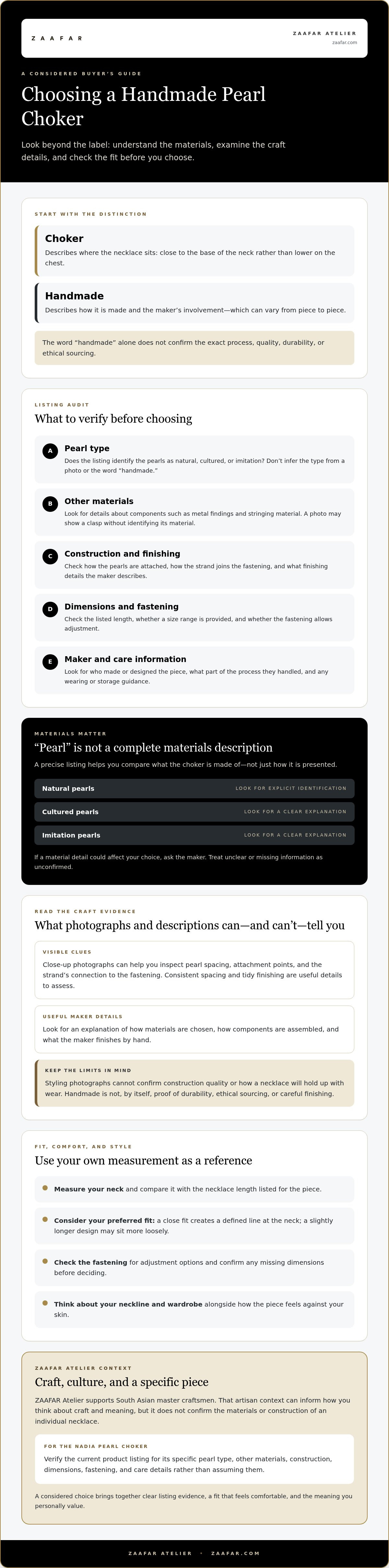
A choker describes where a necklace sits: close to the base of the neck rather than lower on the chest. “Handmade” describes how it is made and the maker’s involvement. These terms tell you different things. A handmade pearl choker may involve hand-selected materials, hand assembly, or detailed finishing, but the label alone doesn’t confirm the quality or exact process.
A handmade pearl choker is a close-fitting pearl necklace made with some degree of hands-on maker involvement, which can vary from piece to piece. Check the product description to find out what that means for the design you’re considering. Look for:
- Materials: What type of pearls and other components are identified?
- Construction: How are the pearls attached, and what finishing details are described?
- Dimensions: What length is listed, and is a size range provided?
- Maker information: Who made or designed the piece, and what part of the process did they handle?
- Care guidance: Are there instructions for wearing and storing it?
How a pearl choker differs from other pearl necklaces
A pearl choker is designed to sit near the neckline, while a longer pearl necklace falls lower on the chest. The exact position depends on the listed length, the design, and where the fastening closes. A close fit creates a defined line at the neck; a slightly longer design may sit more loosely. Compare the necklace measurement with your own neck measurement and preferred fit, and check whether the fastening allows adjustment.
Pearl descriptions also benefit from precision. For background on pearl formation and the composition of a pearl, consult a general reference, then check the product listing for the materials used in the specific necklace.
What “handmade” should help you understand
The word is most useful when the maker explains the process. Look for specifics about how materials are chosen, how the pearls are attached, and how the piece is finished. These details help you assess construction more directly than broad claims about uniqueness or quality. Handmade jewellery isn’t automatically more durable, ethically sourced, or carefully finished than factory-made jewellery; each claim needs its own supporting details.
Methods and maker involvement vary, so don’t assume every handmade piece is assembled in the same way. If a listing leaves out something that matters to you, such as dimensions, fastening, or care, seek confirmation before deciding. Clear information helps you assess the craftsmanship and choose a piece that feels comfortable.
Pearl Type, Construction, and Craft: Details to Check Before You Choose
A listing that says only “pearl” leaves an important question unanswered: what material is actually used? Natural, cultured, and imitation pearls are different descriptions. Don’t assume which type applies based on a photograph or the word “handmade.” A precise materials description lets you compare chokers by what they’re made of, not just how they’re presented.
How to read pearl and material descriptions
Check whether the listing identifies the pearl type and names other components, such as metal findings or stringing material. If it uses terms such as “cultured” or “imitation,” look for a clear explanation rather than relying on a vague product title. Note what’s missing, too: a photograph may show a clasp without revealing its material or how it is attached.
If a material detail could affect your choice, ask the maker directly. Useful questions include: What type of pearls are used? What are the other components made from? How does the necklace fasten? If an answer is unclear, treat the detail as unconfirmed instead of filling in the gaps yourself.
Signs of thoughtful handmade construction
Look closely at product photographs, especially where each pearl meets the thread or setting and where the strand joins the fastening. Consistent spacing and tidy finishing can help you assess what’s visible. Close-up views are more useful than styling images alone, but photographs can’t show how a necklace will hold up with wear.
A helpful maker description explains their role and the steps involved, such as assembling components or finishing the piece by hand. That gives you a basis for judging the craft without treating “handmade” as proof of quality. Durability depends on materials and construction, so it can’t be promised by a label or image. If the listing doesn’t explain the fastening, attachment method, or another detail that matters to you, ask before buying.
Materials can also carry cultural associations beyond their physical properties. The Gemological Institute of America explores these in Pearl History and Lore. Symbolism may add personal resonance, but it doesn’t replace checking a specific piece’s materials and construction.
For a concrete example, ZAAFAR Atelier offers the Nadia Pearl Choker, but its specific pearl type, components, and construction should be confirmed in the product listing. You can review the Nadia Pearl Choker details and see which specifications are provided before deciding whether they meet your preferences.
Handmade or Mass-Produced Pearl Choker: How to Compare the Options
A handmade label can suggest close maker involvement, but it doesn’t tell you enough to judge a piece’s value on its own. Handmade doesn’t automatically mean higher quality, ethical sourcing, or greater durability. Mass-produced designs also vary in materials and finish. Compare what each listing actually discloses instead of assuming one category is better.
Use this table to assess the information available. It compares typical types of disclosure, not the quality of every handmade or mass-produced choker.
| What to check | Handmade listing | Mass-produced listing |
|---|---|---|
| Maker disclosure | May describe who made or designed the piece and which steps they handled. This information alone doesn’t prove ethical practice. | May identify a brand or manufacturer but offer less detail about individual makers or production steps. |
| Materials | Look for a stated pearl type and named metals, thread, or other components. | Look for the same material details. A larger production scale doesn’t determine how clearly they’re disclosed. |
| Construction | Check whether the listing explains assembly, finishing, and fastening. | Check for equivalent details, such as how the strand is constructed and what fastening it uses. |
| Size and care | Look for length, any sizing range, and care guidance specific to the piece. | Check whether dimensions, fit information, and care instructions are provided rather than assumed. |
What a useful comparison table should include
Compare like with like. If one listing names the pearl type and fastening while another says only “pearl necklace,” the first provides more information, not necessarily a better-made choker. Maker transparency can help you understand the process, but it doesn’t prove responsible sourcing or working conditions. Look for specific, verifiable statements and note what remains unknown.
Questions to ask before trusting a handmade claim
If a handmade pearl choker appeals to you but the listing is vague, ask focused questions before deciding:
- Who makes or designs the piece, and which steps are done by hand?
- What pearl type and other materials are used?
- What are the necklace’s dimensions, and how does the fastening affect fit?
- What care guidance applies to this specific piece?
The answers help distinguish a meaningful account of craft from a broad sales phrase. If essential details remain unclear after asking, consider a listing that gives you enough information to assess fit, materials, and construction. Value is easier to judge when the evidence is clear, not romanticized.
How to Choose a Pearl Choker for Your Neckline, Comfort, and Style
A choker’s appeal depends on more than how it looks in a product photo. Its position at the neckline, how it moves with you, and how it pairs with your clothes all shape the experience. Follow these steps to decide whether a particular piece suits your body and how you plan to wear it.
- Measure where you want it to sit. Use a soft tape measure around that part of your neck. Keep it comfortably close, not tight, and note the measurement.
- Compare the listing dimensions. Check the stated necklace length and any sizing range against your measurement. Don’t assume every choker has the same fit.
- Assess the fastening. Look for a description of the closure and whether it allows adjustment. If the listing doesn’t say, ask rather than assuming.
- Consider how you’ll wear it. Think about how long you’ll keep it on, whether you prefer a light or more noticeable feel, and whether any materials may bother your skin.
- Confirm care guidance. Check the instructions for the specific piece so you know how to wear and store it thoughtfully.
How to check choker length and comfort
A listed measurement is a useful starting point, but the necklace’s shape and fastening can affect how it sits. If possible, place a ribbon or string around your intended neckline position, then measure it and compare the result with the product dimensions. Consider how the choker feels when you turn your head, speak, or move. A piece that looks elegant but feels restrictive may not suit your everyday routine.
How to style a handmade pearl choker
Let the neckline guide the visual balance. An open collar or simple scoop neck can give a close-fitting necklace room to stand out, while a high neckline may make it feel more subtle or create a denser look. For a relaxed outfit, pair it with a clean shirt or minimal top. For a formal setting, let the pearl detail complement rather than compete with your other jewellery.
Layering is a personal choice. Try a longer necklace alongside the choker, leaving enough visual space between the pieces, or wear the choker alone as a quiet focal point. There’s no single correct combination. Craft can inform your style without dictating it; for another perspective, explore artisan necklace craftsmanship. You can also find reflective ideas in this mindfulness jewellery guide.
Start with comfort, then consider how the design works with your wardrobe and intentions. To assess a specific example, explore the Nadia Pearl Choker listing and review its stated dimensions, fastening, materials, and care details before deciding.
Explore ZAAFAR Atelier’s Handmade Pearl Choker Through Craft and Meaning
A considered piece of jewellery can bring together material, craft, and a story that feels personally meaningful. ZAAFAR Atelier is a Hamburg- and Pakistan-based luxury jewellery brand founded and designed by Saadia Zaafar. Its wider approach draws on South Asian craftsmanship and supports master craftsmen, bringing an artisan perspective to contemporary adornment.
A design perspective shaped by craft and intention
ZAAFAR Atelier describes its work as handmade and spiritually inspired. That perspective invites you to consider what a piece represents to you: perhaps it marks a personal milestone, reflects an appreciation for skilled making, or simply feels at home in your style. Jewellery can serve as a personal reminder, but its meaning belongs to the wearer; no piece can promise a particular spiritual or wellness outcome.
The brand also works to preserve traditional hand embroidery techniques. This is part of its broader craft context, not evidence that embroidery is used in every design. For the Nadia Pearl Choker, rely on the product listing for details about its specific materials and construction rather than assuming it uses a particular technique.
What to verify on the Nadia Pearl Choker listing
Before choosing a handmade pearl choker, review the product-specific information and confirm anything important that isn’t clearly stated. For the Nadia Pearl Choker, check the listing for:
- Pearl type and other materials: Look for explicit descriptions rather than assumptions based on the product name or photographs.
- Dimensions and fastening: Compare the stated measurements with your preferred fit, and verify how the necklace closes.
- Construction: Look for information about how the piece is assembled and finished.
- Care instructions and availability: Confirm current guidance and whether the item is presently listed as available.
These details let you weigh the design against the criteria explored throughout this guide: clear material information, thoughtful craft, comfortable fit, and a meaning that resonates with you. If a specification is missing, treat it as unknown until the listing or maker confirms it.
For a closer look at the atelier’s artisan perspective, explore the Festive Royalty Necklace artisan story, then discover ZAAFAR Atelier’s jewellery at your own pace.
Choose a Choker That Feels Considered and Truly Yours
The right handmade pearl choker is more than a close-fitting accent. Choose with care by checking what the listing confirms about materials, construction, dimensions, fastening, and care. Handmade alone doesn’t guarantee quality or durability, so compare the details and prioritize a comfortable fit that suits your style.
Meaning matters, too, but it’s personal. ZAAFAR Atelier, founded and designed by Saadia Zaafar, supports South Asian master craftsmen and preserves traditional hand embroidery techniques as part of its wider craft practice. For the Nadia Pearl Choker, check the product listing for its specific materials, measurements, construction, and care guidance rather than assuming details that aren’t provided.
Let clear information guide your choice, and consider how the piece’s craft and character align with what you value. Explore ZAAFAR’s handmade jewellery and discover an adornment that feels aligned with your style and sense of meaning.
Frequently Asked Questions
What makes a pearl choker handmade?
A pearl choker is handmade when a maker has hands-on involvement in creating or assembling it, but the exact process can vary. One maker may hand-assemble the strand, while another may design the piece and hand-finish selected details. The phrase alone doesn’t guarantee quality, durability, or ethical sourcing. For a handmade pearl choker, look for a clear explanation of who made it, which steps were done by hand, and what materials were used.
How can I tell if a pearl choker is real or imitation?
Start with the listing’s material description, which should identify the pearls as natural, cultured, or imitation rather than simply “pearl.” Natural and cultured pearls are both genuine pearls; natural pearls form without human intervention, while cultured pearls form after human intervention. Imitation pearls are manufactured to resemble them. Photos alone may not confirm which type a choker uses. If the description is unclear, ask the seller for details or seek an assessment from a qualified gem professional.
How do I choose the right length for a pearl choker?
Measure around your neck where you want the choker to sit, keeping the tape comfortable rather than tight. Compare your measurement with the exact necklace length and any adjustment range stated in the listing. Don’t assume a standard choker length will fit everyone, or that a fastening is adjustable unless the seller confirms it. Consider how close you want the necklace to sit and whether you need room for comfortable movement.
Are handmade pearl chokers suitable for everyday wear?
They can be, if the materials, construction, fit, and care guidance suit your routine. Before wearing a choker regularly, check its fastening and how its components are attached, then follow the maker’s instructions. Consider whether its weight or materials feel comfortable against your skin and whether it works with your daily clothing. A handmade label alone can’t establish durability, so look for product-specific details before making it an everyday piece.
What should I look for when buying a handmade pearl choker online?
Review the listing for the pearl type, other materials, dimensions, fastening, construction details, and care instructions. Clear close-up photographs can help you inspect visible finishing, but they can’t prove durability or confirm every material. Look for information about the maker’s role, too. If an important detail is missing, ask before purchasing. A handmade pearl choker is easier to assess when its listing gives verifiable specifics instead of relying on the handmade label alone.
Can I layer a pearl choker with other necklaces?
Yes. Pair a choker with a longer necklace to create separation between the pieces, or wear it alone when you want a simpler focal point. Consider the necklaces’ lengths, textures, and visual weight so they complement rather than crowd one another. An open neckline can give layered strands room to show, while a high neckline may create a more compact effect. Treat these as styling options, not strict rules.
How should I care for a handmade pearl choker?
Follow the care instructions for your specific choker, since pearls and other components may require different handling. As a cautious general approach, put jewellery on after applying cosmetics or fragrance, and wipe it gently with a soft cloth after wearing. Avoid soaking it or using harsh cleaners unless the maker confirms that’s suitable. Store it separately to reduce contact with other jewellery, and ask the maker if its care guidance isn’t clear.