
Sustainable Designer Jewelry: Craft, Ethics, and Timeless Style
What makes sustainable designer jewelry a considered choice isn’t just a label. It’s the detail you can trace through its design, materials, and making. A piece can feel personal and lasting, yet words like “ethical” and “eco-friendly” are hard to judge without clear information behind them.
It’s reasonable to want more than broad promises. Before buying, check what a piece is made from, what is known about its makers and production, and whether its design suits the way you expect to wear it. This guide offers practical questions for weighing those details, so you can choose with greater confidence and intention.
We’ll look at materials, craftsmanship, longevity, and the transparency behind sustainability claims, while distinguishing environmental considerations from human ones. ZAAFAR Atelier offers one example of contemporary design engaging with South Asian craft traditions: its handmade work supports master craftsmen and the preservation of traditional hand embroidery. Those details speak to craft, but don’t verify every environmental claim. Asking focused questions can help you appreciate a piece’s design and meaning while being clear about what its available information can and can’t tell you.
Key Takeaways
- Separate design from production claims. Distinctive style alone doesn’t establish sustainability.
- Consider materials, making, and intended lifespan together, and look for product-specific information before assuming a choice has environmental benefits.
- Assess sustainable designer jewelry by asking clear questions about makers, materials, production, and care rather than relying on broad labels.
- Match a piece to how you’ll wear it, then weigh its design, supporting details, and care needs.
- Explore how ZAAFAR Atelier brings South Asian craft traditions into contemporary jewelry, while treating craft details as one part of a wider assessment.
What Makes Sustainable Designer Jewelry Different from Ordinary Accessories?
Design and responsibility are related, but they aren’t the same thing. A designer piece may have a distinctive form, a considered story, or visible handwork. None of those details alone proves that its materials or production have a lower environmental impact or support fair working conditions. The reverse is also true: a responsible material choice doesn’t necessarily make a piece design-led.
A useful working definition: sustainable designer jewelry is design-led jewelry created with attention to craft, intended use, and production choices, supported by specific information about the claims made for it. This is a practical guide, not a universal product-level standard. The term covers several considerations, so look beyond a single material or making method.
What does sustainable designer jewelry mean?
Think of the phrase as two questions. “Designer” describes the creative intention and identity behind a piece. “Sustainable” invites closer examination of how it was made and what its materials and production mean for people and the environment. Ethical consumerism offers broader context for how purchasing choices can reflect social and environmental concerns. When assessing an individual piece, ask what evidence supports each specific claim instead of treating the label as proof.
How is it different from mass-produced fashion jewelry?
A useful distinction is how much you can learn about a piece. A maker may explain its design process, craft techniques, materials, or production choices. In other cases, those details may be unclear or unavailable. Design intention and artisan production can create a meaningful connection, but handmade does not automatically mean responsible. Check what is documented and note what remains unknown.
For more on the care and skill that can shape an artisan-made piece, explore this guide to handcrafted artisan jewelry. Craft details can help explain how a piece comes into being; they shouldn’t be used to infer unverified sourcing, labor conditions, or environmental outcomes.
As you compare options, separate the evidence into clear questions:
- Design: Who created the piece, and what makes its form distinctive?
- Craft: Which techniques or makers are described?
- Claims: Are material, social, or environmental statements specific and supported?
This distinction keeps the choice both personal and grounded. Look for a piece whose design speaks to you, then assess its production information on its own merits. A compelling story can prompt useful questions; transparent, checkable details help you decide what the story can reliably tell you.
How Craft, Materials, and Longevity Shape a Jewelry Piece’s Footprint
A jewelry piece’s footprint takes shape through more than its visible materials. Design affects how it is assembled and worn; production choices influence the resources and people involved; and care can affect how long it remains in use. These factors are connected, but no single detail tells the whole story.
Craft also carries cultural and human value. A technique passed between makers can preserve knowledge and give an object a sense of place. That matters, but it’s distinct from evidence about environmental impact or working conditions. An artisan story can illuminate a piece’s cultural meaning, but it isn’t, on its own, a verified environmental claim.
What should shoppers ask about jewelry materials?
Start with composition: what materials are used, and what does the maker disclose about their origins and processing? Natural origin alone doesn’t establish responsible extraction or processing. For claims such as “recycled,” “reclaimed,” or “traceable,” look for specifics: which material the claim covers, how the term is defined, and what documentation or verification supports it.
For context on industry standards and supply-chain approaches, consult the Responsible Jewellery Council. Its resources can help explain what standards address, but don’t assume a brand or individual piece is certified unless that status is clearly stated and verifiable.
Why does longevity matter in considered design?
Longevity depends partly on construction, but also on whether a piece suits your life. Ask how often you expect to wear it, whether its design works with clothes you already own, and what care its materials require. If it may need specialist attention, check whether suitable care or repair options exist rather than assuming they’re available from the seller.
A design that feels timeless to you may remain relevant for years, especially when it holds personal meaning. That can encourage continued wear, but it can’t guarantee a product’s lifespan or environmental benefit. Claims about durability need product-specific support, just as claims about materials do.
For a practical assessment of sustainable designer jewelry, consider four connected questions:
- Design: Does the piece suit the occasions and ways you’ll wear it?
- Materials: Are its components identified, with sourcing claims explained?
- Making: Are craft techniques and production details described clearly?
- Use: Do you understand its care needs, and can you find out whether repair is possible?
Each answer adds context, not an automatic verdict. If you’d like to see how contemporary design and handcraft meet in wearable pieces, explore ZAAFAR Atelier’s jewelry and accessories.
How to Evaluate Ethical and Sustainability Claims in Designer Jewelry
Strong claims give you something specific to examine. Instead of relying on a broad promise, look for details that identify what a statement covers, how it can be checked, and which parts of a piece or its making it applies to. This helps you assess sustainable designer jewelry without expecting one attractive feature to explain its entire impact.
Use the comparison below as a starting point. A broad phrase isn’t automatically false, but it does call for clarification.
| Area | More specific and checkable | Broad claim to clarify |
|---|---|---|
| Makers | Identifies the makers, skills, or craft techniques involved | “Supports artisans” without saying how or who is involved |
| Materials | Names the materials and explains what “recycled” or “traceable” refers to | “Conscious materials” with no material details |
| Production | Describes a particular process and the scope of the statement | “Responsibly made” without production information |
| Product care | Provides care guidance relevant to the piece | “Made to last” without product-specific support |
Which details make a sustainability claim more credible?
Read the explanation behind the label. Does the brand name the materials, describe the process, and clarify whether a claim applies to one component, a particular piece, or its wider operations? Check whether it separates established facts from future goals and general values. If sourcing or production remains unclear, ask the brand for more detail. A clear answer helps you understand the claim, but doesn’t automatically verify every wider impact.
Shopper checklist: Look for named materials, identified makers or processes, a clear scope for each claim, and care information relevant to the piece.
How can shoppers spot vague or overstated language?
Words such as “ethical,” “eco-friendly,” and “responsible” can signal a brand’s intentions, but they’re difficult to assess without context. Ask what the term means in that specific case and what information supports it. One appealing feature, such as handcraft or a stated material attribute, can’t establish the full social or environmental impact of a piece.
Missing information is a reason to follow up, not proof of wrongdoing. Keep the questions distinct: Who made it? What is it made from? Which production details are disclosed? How should it be cared for? If an answer is limited, treat that as a limit on what you can confidently conclude rather than filling the gap with assumptions.
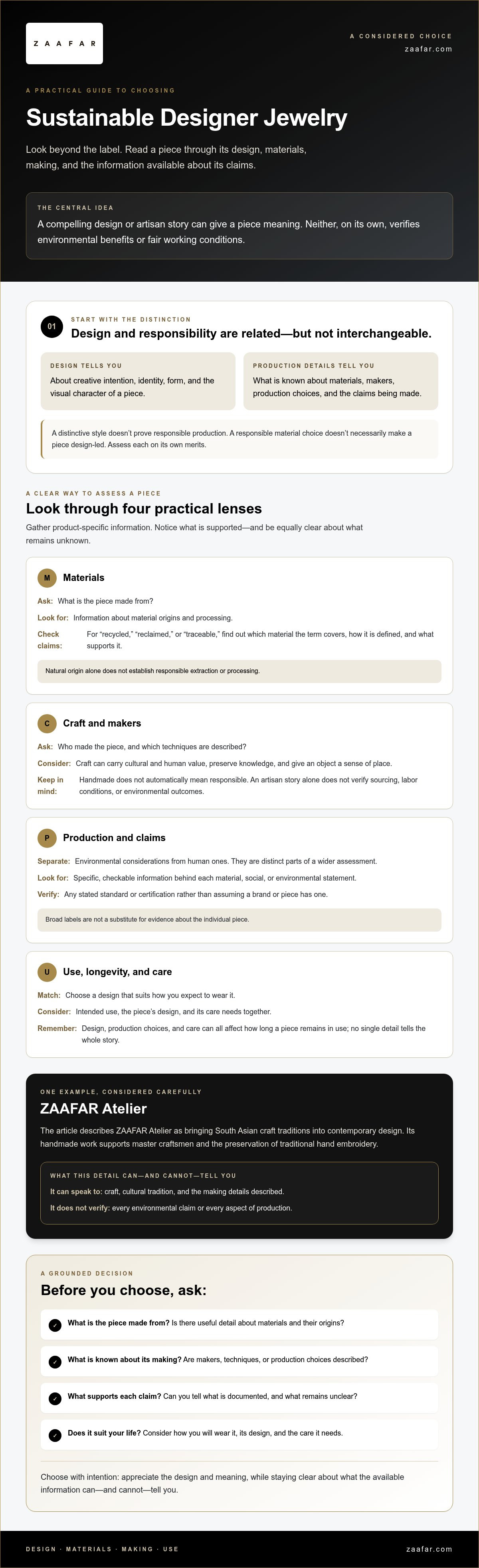
How to Choose Sustainable Designer Jewelry for Your Style and Daily Life
A considered choice should feel right in both meaning and use. A striking piece may express your identity, but if it doesn’t suit the occasions or routines you have in mind, it may spend more time stored away than worn. Move through these four steps before deciding:
- Define the purpose. Is it for everyday wear, a particular occasion, or personal expression?
- Assess the design. Does its shape, scale, and character feel like you? Can you imagine wearing it with clothes you already own?
- Check the evidence. Compare the materials and making details provided with the sustainability claims.
- Consider care. Read the product-specific guidance and decide whether it fits the way you’ll look after the piece.
Personal meaning can make a design feel more connected to your life. For ideas on choosing adornment with intention, explore this guide to mindfulness jewelry and intentional adornment. Let meaning guide your taste, while practical details help you decide whether a piece works for you.
What should you consider before buying a designer piece?
Look closely at the product listing. Check dimensions, named materials, fastening details, and care instructions. Then compare those facts with the language used to describe the piece. If it’s called recycled, traceable, or responsibly made, ask what the claim applies to and what information supports it. Some details may not be available. Asking helps you understand what is known, not demand a particular answer.
Picture the piece in the setting you chose. A design intended for special occasions may not need to suit daily routines, while an everyday piece should feel comfortable and practical for the way you dress and move. Distinctive style and wearability can go together.
How can you care for jewelry and wear it for longer?
Follow the maker’s instructions for the specific piece. Materials and construction can call for different care, so don’t assume one cleaning or storage method suits every design. Store jewelry thoughtfully, and follow any guidance about exposure to moisture, heat, or other conditions that may not suit that item.
If repair or maintenance matters to your decision, ask the maker whether those options are available. Don’t assume they’re offered. Thoughtful care may support continued use, but it can’t guarantee a particular lifespan.
Choosing sustainable designer jewelry means balancing personal resonance, practical wear, and clear information. To see pieces shaped by considered design, discover ZAAFAR Atelier’s jewelry and accessories.
How ZAAFAR Atelier Brings South Asian Craft into Contemporary Jewelry
After considering how to assess design, materials, making, and care, it can help to see how those ideas meet in a specific creative practice. ZAAFAR Atelier is a Hamburg- and Pakistan-based luxury jewelry and accessories brand founded and designed by Saadia Zaafar. Its work brings contemporary design into conversation with South Asian craft traditions.
The brand describes its handmade work as combining modern spiritual design with South Asian craftsmanship. It supports South Asian master craftsmen and the preservation of traditional hand embroidery techniques. These details offer insight into the craft and cultural context behind the work. They’re worth appreciating on their own terms, while keeping separate from claims about sourcing, working conditions, or environmental impact that require their own evidence.
What is distinctive about ZAAFAR Atelier’s approach?
ZAAFAR Atelier places modern spiritual design alongside traditional craft, bringing heritage and contemporary expression into wearable forms. The brand also uses a patented technique to create hybrid jewelry. Its stated purpose is to create jewelry that serves as a charm reminding the wearer to practice gratitude.
The collection includes bracelets, necklaces, rings, earrings, and Artwear. Some pieces use intentional materials such as Rudraksha beads and quartz. These details can help you understand the brand’s design approach and the meaning attached to its work. Personal symbolism can enrich a wearer’s connection to a piece, but it shouldn’t be presented as a guaranteed wellbeing outcome or as proof of sustainability. Handmade craft and cultural continuity are important parts of the story, not substitutes for product-specific information.
How can readers explore the work with informed expectations?
Look at each piece individually. Review its stated materials, making details, and care guidance, then consider whether the information addresses the claims being made. If a sustainability detail isn’t disclosed, you can ask the brand for clarification. An unanswered question limits what you can verify; it isn’t evidence by itself of either a positive or negative impact.
This distinction allows both appreciation and discernment. A craft tradition can give a design depth, while clear product information helps you understand what is known about its making. Each contributes a different kind of insight.
For a closer look at the brand’s contemporary jewelry and accessories, Explore ZAAFAR Atelier.
Choose a Piece with Meaning and Clarity
Choosing sustainable designer jewelry means balancing distinctive design and personal meaning with careful questions about materials, making, and care. Specific, checkable information can clarify what a brand’s claims cover. A craft story offers cultural and human value, but it doesn’t prove every environmental outcome.
ZAAFAR Atelier brings a distinctive perspective to this conversation. Founded and designed by Saadia Zaafar, the Hamburg- and Pakistan-based brand creates handmade work that supports South Asian master craftsmen and the preservation of traditional hand embroidery. These details speak to its engagement with craft traditions; assess any further sustainability claims on their own evidence.
Explore designs, consider how a piece might fit your wardrobe, and seek clarity wherever product details leave questions. Explore ZAAFAR Atelier’s handmade jewelry and Artwear to find a piece that reflects your style and intention.
Frequently Asked Questions
What makes designer jewelry sustainable?
Assess designer jewelry by considering its design, materials, production, and intended use together. A distinctive design or handmade process alone doesn’t establish environmental or social responsibility. Look for clear information about the materials used, how the piece is made, and what specific sustainability claims cover. There’s no single product-level meaning that resolves every question, so judge each claim by its evidence and scope.
Is handmade jewelry always more sustainable?
No, handmade jewelry isn’t automatically more sustainable. Handcraft can express skilled work, cultural knowledge, and a close relationship between maker and piece, but it doesn’t by itself verify material sourcing, working conditions, or environmental impact. Ask what techniques are used and who is involved, then assess those details separately from sustainability claims. Treat the craft story as meaningful information, not a substitute for evidence about other impacts.
How can I tell if a jewelry brand is ethical?
Look for specific, transparent information about who makes the jewelry, the materials used, and the production practices behind it. Check whether statements explain their scope and distinguish current facts from broader values or future aims. If details about sourcing or makers are missing, ask the brand for clarification. An incomplete answer limits what you can verify, but missing information alone doesn’t prove wrongdoing. Consider social claims separately from environmental ones.
Are natural materials automatically sustainable in jewelry?
No, natural origin doesn’t automatically mean a material was sourced or processed responsibly. Its environmental and social implications depend on details that a general label may not explain. Ask what the material is, where it comes from if disclosed, and what evidence supports claims such as “responsibly sourced” or “traceable.” Apply the same care to recycled or reclaimed material claims: check what they cover and whether the brand provides supporting information.
How do I choose sustainable designer jewelry for everyday wear?
Choose a piece that suits your routine and has clear, relevant product information. Check its dimensions, materials, fastening, and care guidance, then consider whether its style works with clothes you already wear. Compare these details with any sustainability claims, and ask what specific statements mean if they’re unclear. Care instructions help you understand how to look after a piece, but don’t assume they guarantee a particular lifespan.
What should I ask before buying artisan jewelry?
Ask who made the piece, which craft techniques were used, and what materials it contains. You can also ask what the brand means by terms such as “ethical,” “recycled,” or “sustainable,” and whether it can share supporting details. Check for product-specific care guidance, and ask whether repair or maintenance options are available rather than assuming they are. These questions help you appreciate the craft while keeping unverified claims distinct from known facts.