
Feroza Gemstone Jewelry for Women: Rings, Pendants and Sets
A vivid blue stone can feel both elemental and deeply personal. Feroza, also known as turquoise, is an opaque gemstone that ranges from blue to green. Feroza gemstone jewelry brings this natural color into wearable art, pairing earthy stone with thoughtful craftsmanship in designs that can be bold or quietly refined.
Choosing a piece involves more than color: the shape of the stone, the setting, and how the jewelry fits your style all matter. This guide explains what turquoise is and explores handmade rings, feroza pendants, and jewelry sets for women. You’ll find a clear introduction to the stone, ideas for wearing each form, and details to consider as you discover a piece that feels meaningful to you.
Key Takeaways
- Learn what distinguishes turquoise and why its natural color gives each piece a distinctive presence.
- See what to consider when choosing a handmade ring, from the stone’s shape to the overall design.
- Explore how pendant styles and jewelry sets can bring turquoise into a coordinated look.
- Discover how a Feroza Bead Ring can offer a meaningful, wearable accent for personal style.
Handmade turquoise rings for women
Feroza gemstone jewelry can include rings, pendants, bracelets, necklaces, and coordinated sets. In a ring, the stone often leads the design. An oval cabochon creates a broad focal point, while a smaller stone makes a subtler accent. A handmade setting might frame turquoise with engraved metalwork or a clean, simple band. Each choice changes the ring’s character, making it feel sculptural, delicate, or boldly colorful. Consider these details to narrow down your style.
A ring’s shape affects how it looks on the finger. An oval stone draws the eye across it, while a round stone creates a balanced outline. A turquoise cabochon has a smooth, domed surface that keeps the stone’s color central. Some rings feature handcrafted engraving around the setting; others keep the metal lines understated. An engraved silver setting, for example, pairs decorative detail with vivid blue. Choose based on whether you want the stone or the metalwork to stand out first.
Fit matters as much as appearance. One adjustable turquoise ring spans sizes 6 to 9. That range offers flexibility, while a fixed band depends on a closer fit. Consider the finger where you plan to wear it. A wide band can feel different from a slim one. Then compare the ring’s scale with your usual jewelry. A large oval can become a focal point beside a plain band. A smaller cabochon can sit comfortably with other simple pieces.
To choose a ring, start with the stone shape, such as oval or round. Then decide whether engraved metalwork or a plain setting better suits your style. Finally, consider the fit and how the ring will pair with jewelry you already wear. Turquoise can add a strong blue accent to neutral clothing or complement other colorful pieces. Handmade rings differ in their visual details, so consider the stone’s shape, setting, and proportions together.
Turquoise and feroza pendants
Feroza pendants bring color close to the face. A single stone can anchor a fine chain, while a larger pendant makes a stronger focal point. Turquoise may appear as a smooth cabochon or polished bead, and each form creates a different look. Consider chain length, pendant scale, and neckline together: a simple neckline leaves room for a prominent stone, while a patterned top may suit a smaller pendant.
Pendant designs vary in stone size and setting. Some showcase a single cabochon. Others use beads or decorative metalwork. One listed Firoza Stone Certified Pendant weighs 15.25 Ratti. This example shows how listings may describe stones by weight. These are individual listings, not a universal measure of pendant quality.
That figure is not a US market benchmark. In the United States, a pendant’s cost depends on the stone, setting, metal, and craftsmanship. Compare these details when considering value. Stone size and the amount of handwork can influence the finished piece and its price.
In the US, look for jewelry listings that clearly identify turquoise or feroza and distinguish the stone from other blue materials. Descriptions of the setting and craftsmanship help you understand what you’re considering. Terms such as “natural” or “certified” should explain a specific claim, not substitute for a clear account of the piece. Choose listings that describe the pendant’s materials in plain language.
Handle a pendant gently. After wearing it, wipe it with a soft, dry cloth and store it separately from harder jewelry to reduce rubbing. Keep the chain clasped during storage to prevent it from tangling around the stone. Avoid applying perfume directly over the pendant. These simple steps help preserve its finish and keep it ready to wear.
For styling, let one pendant lead. Pair vivid turquoise with a simple chain and understated earrings. If you layer necklaces, vary the chain lengths so each pendant remains distinct. A Peacock Pendant Necklace offers another silhouette to consider for your jewelry wardrobe. Choose a shape and scale that complement your neckline and personal style.
Turquoise jewelry sets
A coordinated turquoise set creates visual harmony through shared stone color, metal tone, or design motif. A necklace and earrings might repeat similar blue accents, while a bracelet echoes those details without matching exactly. This keeps a set cohesive rather than rigid. Try choosing one prominent necklace with quieter companion pieces: the eye follows the focal piece first, while related shapes or finishes tie the look together.
Start by deciding how much color you want. A vivid turquoise necklace can lead a restrained set, while small turquoise earrings add a subtle accent. Then consider the metal tone across the pieces. Consistent metal creates a polished impression; mixed finishes can feel more expressive when one element repeats. A shared bezel shape, for instance, can unite pieces with different silhouettes without making them look identical.
Before choosing a set, identify the piece you’ll wear most. Select companion jewelry that complements its scale, then consider where you plan to wear the pieces. A statement necklace may suit a simple evening outfit, while a small pendant with matching earrings can work for everyday styling. This approach helps you avoid a set that feels too formal or visually crowded.
Turquoise sets leave room for personal styling. Wear the full combination for a composed look, or separate the pieces when you want a lighter accent. A turquoise bracelet can stand alone beside a neutral sleeve, while earrings bring color near the face without a necklace. For a coordinated outfit, echo the stone’s blue in a scarf or garment detail. Keep other accessories restrained when the set has elaborate shapes or strong color.
Think of a set as a small visual vocabulary: repeated color connects the pieces, while varied scale gives each one a role. A matching necklace and bracelet can feel balanced when one is visually simple. If every piece competes for attention, choose a single focal point. That styling choice lets turquoise remain distinctive while the overall combination feels composed and personal.
Turquoise stone information
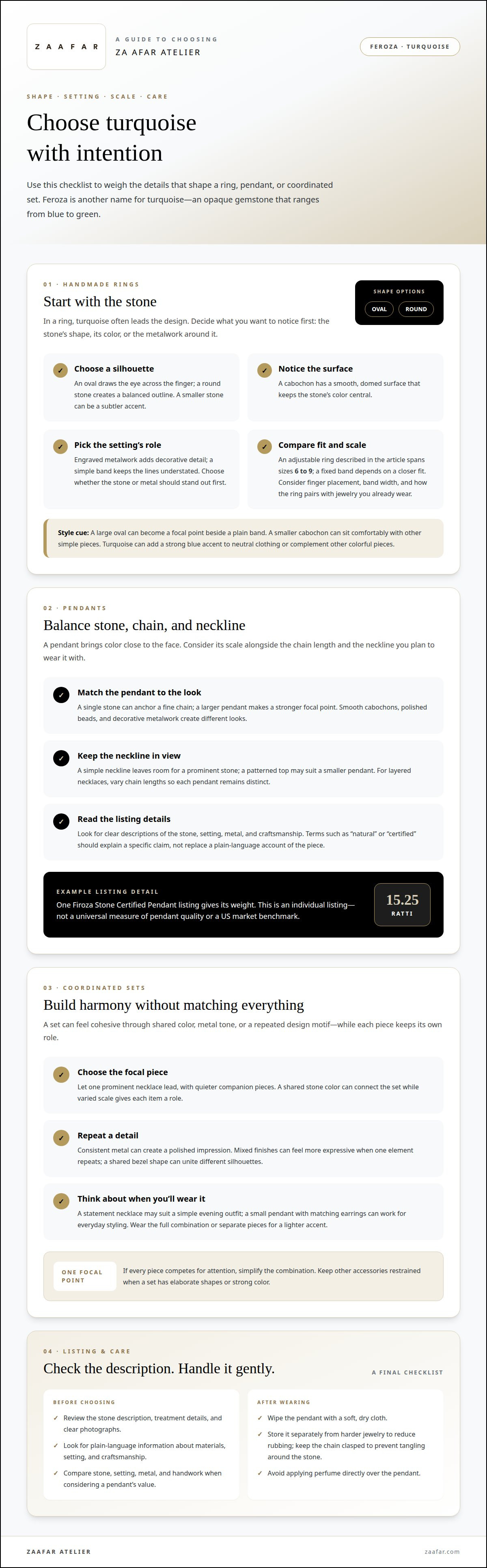
Feroza is another name for turquoise. When shopping online, review the stone description, treatment details, and clear photographs before choosing.
Natural, Treated, and Imitation Stones
Natural turquoise can have uneven color and matrix, the veins or markings within the stone. Dyed stones may show concentrated color around cracks, while stabilized turquoise has been treated to improve durability. Imitation stones use other materials to resemble turquoise. Appearance alone cannot reliably identify every treatment, so look for clear disclosure and independent gem testing for valuable purchases.
Online listings should describe the stone plainly, including any treatments, setting materials, and craftsmanship. Compare photographs from different angles and check that “turquoise” or “imitation turquoise” is used accurately. A certificate can support specific claims, but its value depends on what it identifies. Clear return terms also matter if a piece differs from its photographs.
Everyday Wear and Durability
Turquoise can be worn regularly with thoughtful care, but it is softer and more porous than many gems. Hard knocks can chip or scratch its surface, and oils, cosmetics, and household chemicals may affect its appearance. A ring faces more contact than a pendant, so consider a protective setting for everyday wear and remove jewelry before rough tasks. After wearing, wipe the stone gently with a soft, dry cloth.
Storage also helps preserve turquoise. Keep it apart from harder jewelry that could scratch it, and avoid prolonged exposure to heat or direct sunlight. A pendant worn beneath clothing may receive less impact than a ring, so consider your daily routine when choosing a form. These habits help maintain the stone’s finish without treating it as indestructible.
Cultural and Spiritual Meanings
Turquoise carries varied meanings across cultures. In some traditions, it symbolizes protection, good fortune, or connection with the natural world. These are cultural beliefs, not guaranteed effects. Feroza jewelry can also hold personal meaning: someone might choose it to remember a journey, honor family heritage, or mark a new intention. Meaning depends on the person and the tradition.
For a thoughtful choice, learn the story behind a design and consider whether its symbols reflect a tradition you respect. A turquoise talisman may serve as a personal reminder of courage or gratitude. You might wear it for its color, craftsmanship, symbolism, or all three, while recognizing that cultural meanings are specific rather than universal.
Explore gemstone adornment for another expressive approach to meaningful jewelry.
ZAAFAR Atelier: Feroza Bead Ring
ZAAFAR Atelier’s Feroza Bead Ring brings a turquoise accent to personal, intentional style. The brand’s handmade, spiritually inspired jewelry is crafted using a patented technique, with each piece serving as a charm to remind the wearer to practice gratitude. Choose the ring to wear feroza in a ring rather than as a pendant or part of a coordinated set.
Consider how you want the stone to complement the jewelry you wear every day. A ring can carry personal meaning through its color, craftsmanship, and place in your routine. ZAAFAR Atelier also creates other handmade adornments, but the Feroza Bead Ring is the direct way to bring feroza into your collection.
Explore ZAAFAR Atelier’s Feroza Bead Ring and choose a piece that suits your style.
Choose a Piece That Feels Like Yours
Let your next jewelry choice begin with intention. Consider the colors, shapes, and symbols you want close at hand. A meaningful piece can mark a personal moment or bring a favorite detail into your everyday style. Feroza gemstone jewelry offers one way to express that connection, guided by what feels right for your collection.
ZAAFAR Atelier’s pieces offer different forms of expression, from the Festive Royalty Necklace and Midline Copper Bracelet - Minimalist Protection Talisman to the Heart Shape Bodysuit. Each has its own place in a personal wardrobe, so follow the design that speaks most clearly to you.
Take a quiet moment to explore the collection and consider which piece feels aligned with your style and intention. Explore ZAAFAR Atelier’s jewelry collection, and let your next choice reflect what matters to you.
Frequently Asked Questions
What is Turquoise?
Turquoise is an opaque blue-to-green gemstone mineral used in jewelry and decorative objects. Its color comes from its mineral composition, and natural stones may also show darker veins or patches called matrix. These patterns make each stone distinct. A polished turquoise cabochon, for example, displays the stone’s surface and color without facets.
What is feroza gemstone, and is it the same as turquoise?
Feroza is a name commonly used for turquoise, especially in South Asian and Persian-influenced jewelry contexts. The terms generally refer to the same blue-to-green gemstone, not separate types of stone. In product descriptions, look for clear wording about whether a piece uses turquoise and whether the stone has been treated. The name alone does not establish its origin or treatment.
What colors, grades, and sources are common for feroza gemstones?
Feroza commonly appears in blue, green, and shades between them, sometimes with a contrasting matrix. Descriptions of quality often consider color, pattern, surface condition, treatment, and workmanship; grading terms can vary between sellers. Iran, including Nishapur, and Afghanistan are recognized source names in turquoise listings. Stated origin is one detail to consider, not proof of authenticity or quality on its own.
Where can you buy authentic feroza jewelry in the US?
Look for jewelry listings that clearly identify turquoise or feroza and describe the stone, setting, and craftsmanship in plain language. Check that the product description distinguishes turquoise from other blue materials.