
Slow Fashion Jewelry: The Conscious Evolution of Luxury in 2026
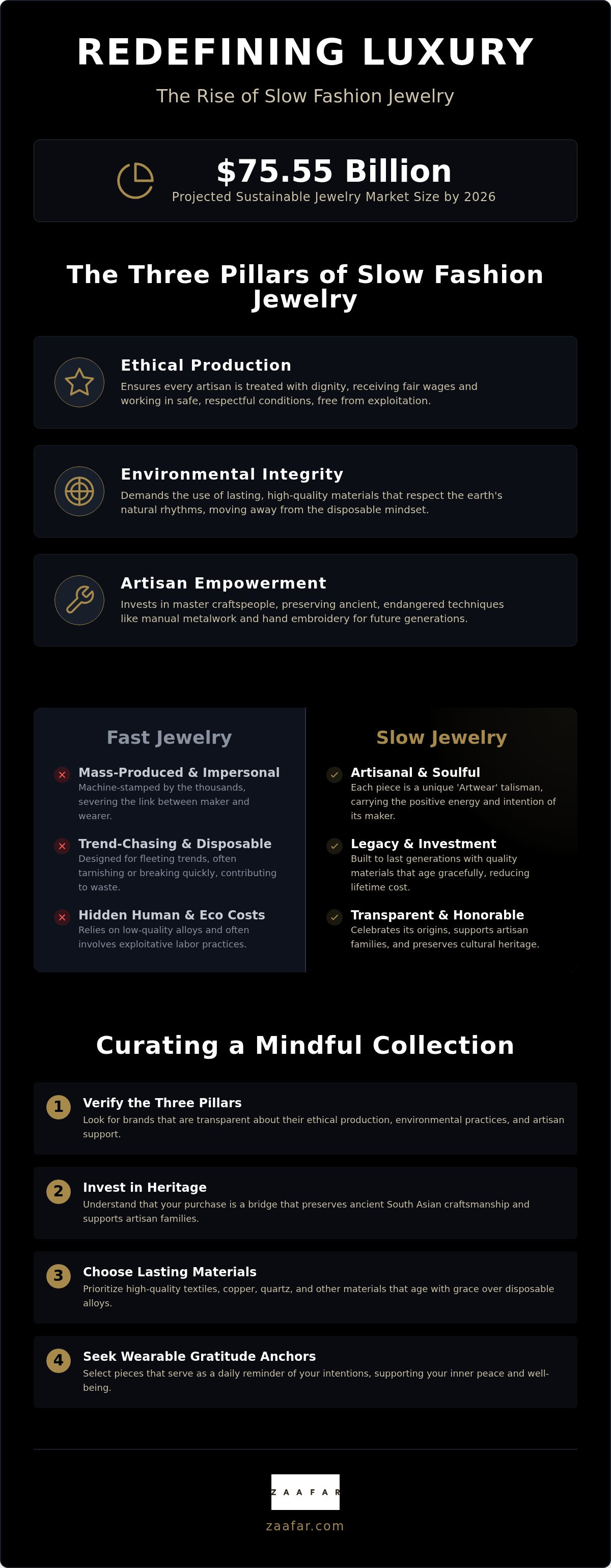
What if the most valuable element of your jewelry wasn't the shimmer of a metal, but the soul of the person who shaped it? With the sustainable jewelry market reaching 75.55 billion dollars in 2026, the hollow promise of mass-produced luxury is finally fading. You've likely felt the frustration of a favorite piece tarnishing too soon or the nagging guilt that comes with fast fashion's hidden costs. It's time to move beyond disposable trends and embrace accessories that carry a heartbeat.
We agree that luxury should feel like a blessing, not a burden. It's about finding pieces that act as talismans for your inner strength while honoring the earth and its people. This article reveals how slow fashion jewelry is redefining the industry through intentional craftsmanship and spiritual significance. You'll discover how to build a timeless collection that supports master artisans and serves as a daily reminder of your highest intentions. We're exploring the shift from mere decoration to wearable art that preserves heritage and protects your peace.
Key Takeaways
- Learn to identify the three pillars of ethical production that distinguish authentic slow fashion jewelry from the fleeting cycles of mass production.
- Understand how your investment serves as a bridge to preserve ancient South Asian craftsmanship while providing sustainable support for master artisan families.
- Recognize the hidden environmental impacts of disposable accessories and the long-term value of choosing pieces built with intentional, lasting materials.
- Master the art of curating a mindful collection that balances modern aesthetics with spiritual protection and versatile elegance.
- Discover how specific artisanal techniques can turn high-end jewelry into wearable gratitude anchors that support your daily well-being and inner peace.
What is Slow Fashion Jewelry? Defining the 2026 Movement
Slow fashion jewelry isn't just a trend; it's a rebellion against the frantic, hollow pace of modern consumption. For decades, the jewelry industry thrived on high volumes and low quality, leaving wearers with tarnished metals and empty stories. To understand the root of this movement, we must ask: What is Slow Fashion? At its core, it's the conscious rejection of the "disposable" mindset. It's an invitation to slow down and appreciate the meticulous hours required to create something of lasting value.
This movement stands firmly on three essential pillars. First, ethical production ensures that every hand touching a piece is treated with dignity and paid a fair wage. Second, environmental integrity demands the use of materials that respect the earth's natural rhythms. Third, artisan empowerment focuses on investing in the master craftsmen who keep ancient traditions alive. In 2026, luxury is no longer defined by a price tag, but by the depth of these commitments.
We're witnessing a profound shift from "carbon-neutral" checkboxes to "human-centric" luxury. While environmental stats matter, consumers now crave the warmth of human connection. They seek a bond with the maker's journey. This intentionality in the design phase replaces the reactive, frantic pace of trend-chasing that defines fast fashion. Every curve and stitch is deliberate, born from a vision rather than a sales algorithm.
The Shift from Fast to Meaningful Adornment
Mass production severs the sacred link between the wearer and the maker. When a machine stamps out ten thousand identical rings, the spirit of the object evaporates. This void has led to the rise of "Artwear," a category where pieces like the Mythic Shoulder Adornment serve as conduits for conscious self-expression. These aren't just accessories; they're talismans that carry the vibration of their creation. Slow fashion jewelry is a legacy-building practice that transforms personal adornment into a bridge between ancestral wisdom and future generations.
Quality Over Quantity: The Investment Mindset
Investing in a single handmade piece, such as a Midline Copper Bracelet, far outweighs a drawer full of fading accessories. Materials like copper, quartz, and high-quality textiles don't just last; they age with grace. They possess a physical and energetic longevity that high-street alloys simply cannot match. By choosing slow fashion jewelry, you're making a choice that reduces the lifetime cost of your wardrobe. You stop buying to replace. You start buying to keep, building a collection that grows more meaningful with every passing year.
The Artisan Journey: Preserving Heritage through Slow Luxury
Luxury isn't found in a factory-sealed box; it's a living heritage. While many brands highlight recycled metals or carbon offsets, the true heartbeat of slow fashion jewelry lies in the hands of the people who shape it. This human energy is the missing link in modern sustainability. When an artisan in South Asia spends days on a single piece, their intention becomes woven into the very fibers and metals of the adornment. It's a transfer of spirit that machines simply cannot replicate.
The impact of fair wages and ethical working conditions extends far beyond a bank account. It changes the final energy of the piece. When a craftsman works in a sanctuary of respect rather than a high-pressure factory, that peace is felt by the wearer. In 2026, we're seeing a return to these values. Consumers want to know that their Peacock Pendant Necklace or Nadia Pearl Choker was born from dignity, not exploitation.
South Asian Craftsmanship: A Legacy of Intention
The history of handmade jewelry in Pakistan is deeply rooted in spiritual protection and communal identity. For centuries, these techniques were sacred lineages passed down through generations. Today, the atelier serves as more than a workshop. It is a space where master craftsmen reclaim their pride in an era of digital automation. By focusing on manual metalwork and traditional hand embroidery, we ensure these endangered cultural techniques don't vanish into history.
Pieces like festive luxury necklaces do more than just sparkle. They tell a story of cultural survival and resilience. This is the essence of slow luxury: a bridge between ancient wisdom and modern aesthetics. It's about honoring the past while creating something that resonates with the contemporary soul.
The Human Touch: Why Handmade Beats Machine-Cut
Machine-cut jewelry offers a cold, repetitive perfection. In contrast, handmade "Artwear" embraces the subtle variations that make each piece a unique talisman. These aren't flaws; they're the fingerprints of a soul. The meditative process of hand-weaving or setting stones requires a level of skill that no algorithm can master. It's a slow, deliberate dance between the maker and the material.
This craftsmanship creates a profound spiritual connection for the wearer. You aren't just putting on an accessory; you're inviting a story into your daily life. Every Jacquard Weave Bracelet or Feroza Bead Ring carries this weight of intention. If you're ready to start your own journey with pieces that honor this heritage, you can explore our curated Artwear collection. By choosing the human touch, you help preserve a legacy that machines can never understand.
Slow vs. Fast Jewelry: An Ethical and Environmental Comparison
Mainstream jewelry brands often grapple with a "deadstock" crisis, where millions of unsold, low-quality pieces end up in landfills every year. This massive overproduction is the hallmark of the fast fashion cycle. In contrast, slow fashion jewelry operates on a model of scarcity and intention. By producing in small, artisanal batches, we ensure that every piece has a purpose and a home. There's no waste, only art. This approach eliminates the need for aggressive clearance sales and prevents the environmental strain caused by discarded metal and plastic.
Transparency is the only antidote to the anonymity of the modern supply chain. When you buy from a mass-market retailer, you're often purchasing a product with a ghost-like history. You don't know whose hands shaped the metal or if they were paid a living wage. Ethical brands provide a clear map of their production, from the South Asian master craftsmen to the final polish. You aren't just buying an object; you're supporting a verifiable story of human dignity.
Material Integrity: From Rudraksha to Quartz
When we speak of sustainability, we must look beyond the "recycled" label. While recycling is a step forward, "intentional" materials offer a deeper connection to the earth. These elements aren't chosen just because they're available; they're selected for their spiritual and physical benefits. Consider the materials that form the foundation of a conscious collection:
- Rudraksha beads: Sacred seeds that serve as gratitude anchors and provide a sense of grounding.
- Quartz: A natural stone used for clarity and spiritual alignment.
- Copper and Silver: Preferred for their physical longevity and energetic properties, these metals age with the wearer rather than degrading.
Materials like copper and silver are chosen for their lasting power. Unlike the "pot metal" used in fast fashion, these metals don't break or tarnish beyond repair. The ethical sourcing of stones like Feroza and Emerald ensures that the earth is respected during the extraction process. This maintains the stone's natural purity, ensuring it arrives to you with its energy intact.
The True Cost of Fast Fashion Accessories
The glitter of "affordable" gold-plated jewelry often hides a dark reality of labor exploitation and toxic production. Low-cost accessories frequently rely on plating processes that use hazardous chemicals like cadmium or lead. These substances aren't just dangerous for the environment; they're harmful to the workers who handle them daily. Cheap luxury is a myth that someone else always pays for.
While a price tag might seem low at the checkout, the environmental and human toll is staggering. Choosing slow fashion jewelry over mass-produced items supports a system built on lasting values rather than disposable ones. Every "affordable" piece of jewelry often costs the planet more than the consumer will ever pay in currency. By shifting your mindset toward investment pieces, you protect both the earth and your own peace of mind.
Curating a Mindful Collection: A Guide to Sustainable Selection
Your jewelry box should be more than a storage space. It's a sanctuary. Curating slow fashion jewelry isn't about filling every slot in a velvet tray; it's about selecting pieces that resonate with your inner world. This process begins with a shift from impulse to intuition. Instead of chasing a fleeting aesthetic, you're looking for a companion that will walk with you through years of evolution. A mindful collection is built on the foundation of quality, ensuring that every item you own carries a weight of purpose.
Versatility is the silent partner of sustainability. When you choose a piece like the Nadia Pearl Choker or the Midline Emerald Belt, you're investing in items that transition effortlessly from a morning meditation to an evening gathering. This adaptability reduces the need for "event-specific" fast fashion that often ends up forgotten. Before acquiring something new, ask yourself two vital questions: "Who made this?" and "What is the intention?" If the brand cannot answer these with clarity and pride, the piece likely lacks the soul required for a conscious collection.
Evaluating Transparency and Traceability
Authentic brands don't hide behind vague marketing terms. They invite you into the atelier. When browsing a brand's "About" page, look for specific names of artisan communities and detailed descriptions of their processes. Small-batch production and limited editions are clear indicators of a slow approach, as they prioritize the health of the craftsman over the speed of the supply chain. The jacquard weave bracelet serves as a masterclass in this philosophy, showcasing how traditional textile arts can be traced directly back to the skilled hands that wove them. Traceability transforms a simple accessory into a documented piece of history.
Choosing Pieces with Spiritual Resonance
Every material carries a frequency. Selecting jewelry that aligns with your current intentions, whether you seek protection, clarity, or grounding, turns your wardrobe into a spiritual toolset. Talismans like the Midline Copper Bracelet act as daily reminders of your higher self, providing a sense of "modern éveil" or awakening in a busy world. This isn't just decoration; it's an investment in your well-being. By choosing pieces that reflect your personal journey, you create a collection that grows in value as you do. If you're ready to find your next intentional piece, you can shop our conscious Artwear collection to discover adornments that speak to your soul.
ZAAFAR Atelier: Where Artwear Meets the Gratitude Practice
ZAAFAR Atelier stands at the intersection of modern aesthetics and ancient soul. It's the ultimate antidote to the hollow luxury that has dominated the industry for too long. While we've explored the importance of heritage and material integrity, ZAAFAR takes these concepts further by positioning jewelry as a spiritual tool. This isn't just about decoration. It's about creating a physical bridge between your inner world and your outer expression. This vision represents the pinnacle of the slow fashion jewelry movement, where every piece serves a higher purpose than mere adornment.
The brand's unique identity is forged through a collaboration between Hamburg's minimalist design sensibilities and the unmatched skill of South Asian master craftsmen. This partnership ensures that ancient techniques, like traditional hand embroidery and manual metalwork, find a place in a contemporary wardrobe. By bridging these two worlds, we create "Artwear" that feels both timeless and revolutionary. You aren't just wearing a necklace; you're wearing a story of global connection and mutual respect.
The Patented Gratitude Technique Explained
At the heart of the ZAAFAR philosophy is a patented technique designed to foster mental well-being. We use specific textures and intentional materials, such as Rudraksha beads and natural quartz, to act as physical cues for the wearer. When you touch your Jacquard Weave Bracelet or feel the weight of your Feroza Bead Ring, it serves as a prompt to pause and find a moment of thankfulness. It's a grounding exercise built into your daily routine. This science-backed approach to "jewelry as a charm" helps regulate the nervous system by anchoring the mind in the present. A ZAAFAR piece transforms from a silent accessory into a wise mentor that gently pulls your focus back to the present moment.
Artwear: The Future of Conscious Luxury
Conscious luxury in 2026 is moving beyond traditional categories. We're seeing the rise of Artwear, which includes innovative pieces like the Mythic Shoulder Adornment and the Midline Emerald Belt. These items challenge the boundaries of fashion, turning the human body into a canvas for spiritual expression. Understanding how mindfulness jewelry integrates into a holistic lifestyle is key to this evolution. It's about more than just what you wear; it's about how you live and the energy you choose to carry with you.
We invite you to join a community of conscious, spiritually-aligned individuals who value depth over surface-level trends. By choosing slow fashion jewelry that carries the weight of intention, you're participating in a modern awakening. This is an invitation to adorn yourself with meaning and to carry the vibration of gratitude wherever you go. Your journey toward a more mindful, beautiful life begins with a single, intentional choice.
Embrace the Future of Intentional Adornment
The evolution of luxury is no longer about the noise of excess, but the quiet strength of intention. You've seen how choosing slow fashion jewelry creates a ripple effect that touches everything from the preservation of ancient South Asian techniques to your own daily mindfulness practice. By prioritizing quality over volume, you aren't just curating a wardrobe; you're building a legacy of respect for the earth and the master craftsmen who inhabit it.
ZAAFAR Atelier bridges the gap between Hamburg's modern design and the profound skill of Pakistani artisans. Our pieces, featured in luxury artwear exhibitions, serve as more than accessories. They're mentors for your soul, utilizing a patented gratitude reminder technique to anchor you in the present moment. Every purchase provides direct support for artisan families, ensuring their heritage thrives in a digital world.
It's time to align your external style with your internal values. We invite you to explore ZAAFAR Atelier’s collection of intentional Artwear and discover talismans that speak to your higher self. Step into a community where every ornament is a blessing. Your journey toward a more conscious, beautiful life is just beginning.
Frequently Asked Questions
What is the difference between slow fashion and sustainable jewelry?
Sustainable jewelry focuses primarily on material sourcing and environmental impact. While slow fashion jewelry encompasses these green practices, it adds the vital dimensions of time, intentionality, and human dignity. It rejects the high-speed production cycles that even some sustainable brands follow. This movement is about the deliberate pace of creation and the long-term relationship between the wearer and the piece. It values cultural preservation as much as ecology.
Is slow fashion jewelry always more expensive than mass-produced pieces?
The initial price reflects fair wages for master craftsmen and the cost of intentional materials. While mass-market items seem cheaper at the checkout, they often require frequent replacement due to tarnishing or breakage. Slow fashion pieces are built for longevity, reducing the total cost per wear over several years. You're investing in a piece that retains its spiritual and physical integrity rather than a disposable accessory that ends in a landfill.
How do I care for handmade slow fashion jewelry to ensure it lasts?
Proper care involves keeping your pieces away from harsh chemicals, perfumes, and excessive moisture. Since materials like copper and silver are natural, they may develop a unique patina over time that reflects your personal journey. Clean them gently with a soft, dry cloth to maintain their luster. Storing your talismans in a dedicated pouch or box prevents scratches and preserves the energetic quality and spiritual intention of the materials.
Can slow fashion jewelry be considered a spiritual tool?
Yes, specifically when it's crafted with sacred intention and natural materials. At ZAAFAR Atelier, we utilize a patented technique to create hybrid pieces that function as gratitude anchors. Materials like Rudraksha beads and quartz are chosen for their grounding and protective properties. When you wear slow fashion jewelry with a specific purpose, it becomes a daily reminder to pause, breathe, and reconnect with your inner strength and higher self.
What materials are most commonly used in ethical jewelry making?
Ethical makers prioritize materials that respect the earth and the wearer's well-being. This includes natural stones like Feroza and Emerald, along with metals like copper and sterling silver. Many brands also incorporate high-quality textiles and traditional hand embroidery. Unlike mass-produced items, these materials are chosen for their physical longevity and their ability to hold a specific energetic frequency for the wearer. Every element is selected with a clear spiritual purpose.
How does buying slow fashion jewelry support artisan communities?
Your purchase provides direct economic support to master craftsmen, particularly in regions like South Asia. It ensures that ancient techniques, such as manual metalwork and intricate embroidery, aren't lost to industrial automation. By paying fair wages and providing ethical working conditions, brands allow these families to thrive. This support fosters community pride and preserves a living heritage. It creates a sustainable future for traditional artistry that machines can't replicate.
What is Artwear and how does it fit into a sustainable wardrobe?
Artwear is a unique category that merges high-end jewelry with wearable art. It includes unconventional pieces like mythic shoulder adornments and emerald belts that challenge traditional fashion boundaries. These items are designed for versatility and longevity, encouraging a mindful approach to style. By investing in one statement Artwear piece, you reduce the need for multiple disposable accessories. It allows for deep, conscious self-expression while fitting perfectly into a curated, sustainable wardrobe.
How can I tell if a jewelry brand is truly practicing slow fashion?
Look for deep transparency regarding their supply chain and specific artisan stories. A true brand will share details about the people who made the jewelry and the traditional techniques used. Check for limited editions or small-batch production rather than massive, seasonal collections. If the brand emphasizes the spiritual why behind their materials and the time taken to craft each piece, they're likely committed to the slow fashion jewelry movement.