
Handmade Spiritual Bracelets: Meaning, Materials, and Artisan Craft
What if the meaning of a bracelet lies less in what it promises to do and more in what it invites you to remember? Handmade spiritual bracelets can offer a tangible reminder of an intention, a value, or a moment of gratitude. Yet marketplace listings can make it difficult to judge who made a piece, what it is made from, and whether its spiritual claims are thoughtful or overstated.
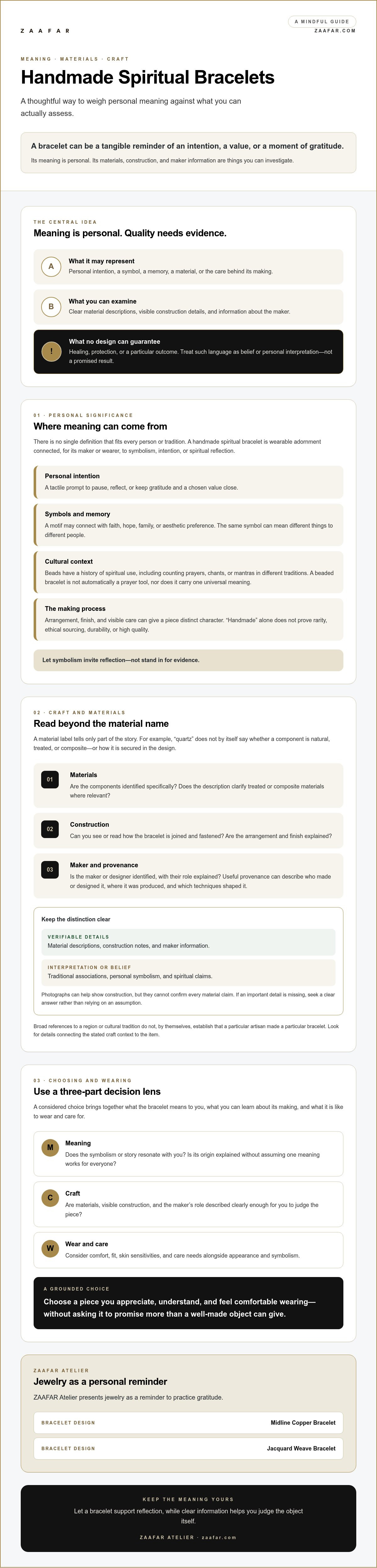
It’s natural to want a bracelet that feels significant and looks beautiful, while remaining comfortable enough to wear. Symbolism can support personal reflection, but no material or design can guarantee healing, protection, or a particular outcome. Meaning is personal; quality can be assessed through clear material descriptions, visible construction details, and honest information about the maker.
This guide explains how to weigh symbolism and intention against material details, workmanship, fit, and care. Use it to compare options and choose a piece that reflects your values and style without asking it to promise more than a well-made object can give.
Key Takeaways
- Handmade spiritual bracelets can carry meaning through personal intention, symbolism, materials, or the care behind their making.
- Look for clear material descriptions, visible construction details, and information about the maker when assessing artisan craftsmanship.
- Consider healing or protection language as belief or personal interpretation, not a guaranteed result.
- Choose a bracelet by weighing symbolism and craftsmanship alongside comfort, skin sensitivities, care needs, and fit.
- ZAAFAR Atelier presents jewelry as a personal reminder to practice gratitude; its bracelet designs include the Midline Copper Bracelet and Jacquard Weave Bracelet.
What Makes a Handmade Spiritual Bracelet Meaningful?
A handmade spiritual bracelet is wearable adornment shaped by human craft and connected, for its maker or wearer, to symbolism, personal intention, or spiritual reflection. Its meaning might come from a symbol, a material, the process of making it, or a memory the wearer associates with it. There isn’t one definition that fits every tradition or person.
Beads, for example, have a long history of spiritual use. The use of prayer beads includes counting prayers, chants, or mantras in different traditions. That context can explain why beads carry significance, but a beaded bracelet isn’t automatically a prayer tool or a symbol with the same meaning for everyone. Its interpretation depends on its cultural context and the wearer’s relationship to it.
How personal intention shapes a bracelet’s meaning
A bracelet can become a small, tactile reminder of gratitude, reflection, or a value someone wants to keep close. Seeing or touching it may prompt a personal pause, much like noticing a meaningful object at home. The piece doesn’t create a particular feeling or outcome; the wearer gives it significance through personal associations and choices.
The same symbol can speak differently to different people. One wearer might connect a motif with a family memory, while another sees it as an expression of faith, hope, or aesthetic preference. Rather than assuming a symbol has a universal meaning, look for an explanation of its origin and decide whether that interpretation resonates with you.
What handmade adds beyond appearance
Handmade describes how an object is made, not everything about its quality or values. Human skill and considered design can give a bracelet a distinct character through the arrangement of its elements, the finish of its details, or the care visible in its construction. These qualities may deepen your connection to a piece, but “handmade” alone doesn’t prove it’s rare, ethically sourced, durable, or made to a high standard.
Assess the information, not just the label. A useful listing or maker description should identify materials clearly, explain relevant construction details, and say who made or designed the piece when that information is available. These details give you a stronger basis for judging what you’re buying than broad spiritual language alone.
Let symbolism invite reflection rather than stand in for evidence. Claims that a bracelet guarantees healing, protection, or other outcomes go beyond personal meaning. A thoughtful choice can still feel deeply significant when it brings together a design you appreciate, a story you understand, and an intention that belongs to you.
How Artisan Craft and Materials Shape Handmade Spiritual Bracelets
Material names tell only part of a bracelet’s story. To judge handmade spiritual bracelets carefully, read the material description alongside construction details and information about the maker. “Quartz,” for instance, identifies a material but doesn’t tell you whether a component is natural, treated, or composite, or how it is secured in the design. For background on gemstone history and traditional associations, consult the Gemological Institute of America’s gemstone meanings and lore. Keep symbolic interpretations separate from verifiable material facts.
Questions to ask about materials and workmanship
Look for specific, consistent descriptions. If a listing uses broad phrases such as “natural stones” or “metal beads,” check whether it identifies the components more precisely. Then inspect close-up images and construction notes: how are the beads arranged, how are joins finished, and what kind of fastening is used? These details help you understand the design, though photographs alone can’t confirm every material claim.
- Does the listing identify each material, including any treated or composite components?
- Can you see or read how the bracelet is joined and fastened?
- Is the maker or designer identified, with a clear description of their role?
If a detail that matters to you is missing, ask the seller before relying on an assumption. Look for an answer that distinguishes what is known from what isn’t.
Why artisan provenance deserves careful attention
Useful provenance can explain who designed or made a piece, where it was produced, and which techniques shaped it. Broad references to a region or cultural tradition don’t, by themselves, establish that a particular artisan made a particular bracelet. Look for details connecting the stated craft context to the item, and verify specific sourcing or production claims rather than treating evocative language as proof.
ZAAFAR Atelier is a Hamburg- and Pakistan-based brand founded and designed by Saadia Zaafar. Its craft context includes support for South Asian master craftsmen and traditional hand embroidery, but that doesn’t mean every bracelet uses embroidery. The brand describes its jewelry technique as patented, but that fact alone doesn’t explain how an individual piece is constructed. Its Midline Copper Bracelet is a specific copper example, while Rudraksha beads and quartz are materials in the broader brand context, not features to assume across all bracelets.
For a closer look at the maker’s approach and confirmed bracelet designs, explore ZAAFAR Atelier’s handcrafted jewelry. Apply the same careful eye to any piece you consider: clear material details, visible workmanship, and specific maker context support a more informed choice.
How to Compare Handmade Spiritual Bracelets Without Overreading Their Claims
Compare what can be checked with what is personal. A listing may clearly identify materials and construction, while its symbolism reflects a tradition, the maker’s interpretation, or your own association. Keep those categories distinct: you can assess a clasp or material description, but spiritual resonance isn’t an objective quality to rank.
Symbolic meaning versus guaranteed spiritual effects
Symbols can carry cultural, spiritual, or personal meaning, and interpretations may differ among traditions and individuals. Read a seller’s explanation as context, not as a universal definition. Claims that a bracelet heals, protects, or guarantees a specific outcome should be treated as belief or personal interpretation unless reliable evidence supports more.
A symbol can be meaningful without guaranteeing a physical or spiritual outcome. Jewelry may serve as a reminder or expression of belief, but it isn’t a substitute for medical, psychological, or other professional support. Choose imagery that resonates with you without needing to accept every claim attached to it.
A practical comparison of craft, materials, and wearability
Use a simple comparison table to separate listing details from personal preference. Fill it in from the seller’s description, images, and any clarification you receive. “Not stated” is useful information: it shows where you may want to ask a question instead of guessing.
| Confirmed materials | Craftsmanship evidence | Symbolism | Fit | Care |
|---|---|---|---|---|
| Option A: Record named components and note anything unclear. | Look for close-ups and descriptions of joins, finish, and fastening. | Note the maker’s explanation separately from your own interpretation. | Check measurements and whether the proportions suit your wrist. | Record stated care guidance; ask if it’s missing. |
| Option B: Apply the same standard; don’t infer materials from color or appearance. | Compare visible construction and the specificity of maker information. | Ask whether the meaning comes from a stated tradition or personal association. | Consider clasp security, weight, and comfort for your routine. | Compare any care instructions before deciding. |
Keep facts and preferences separate. “The listing names copper” is a product detail; “I like its warm tone” is a style preference; “it reminds me to feel grounded” is personal meaning. This distinction makes it easier to compare handmade spiritual bracelets without dismissing the value a symbol may hold for you.
Before choosing, check whether the bracelet’s scale and fastening suit regular wear, and whether its care instructions fit your routine. A piece can feel spiritually resonant and be beautifully made, yet still not be the right match if its fit or upkeep doesn’t work for your life.
How to Choose and Wear a Handmade Spiritual Bracelet
The right bracelet brings personal meaning and everyday comfort into the same choice. Before browsing, consider what you want the piece to represent and how it will fit into your life. This five-step process can help you compare options without letting symbolism overshadow practical details.
- Choose an intention. Select one personal reminder, such as gratitude or steadiness, to guide your search. It’s a point of reflection, not a promise that the bracelet will create a particular result.
- Consider the symbolism. Read how the maker explains a motif and explore its cultural context respectfully. Don’t assume the same symbol means the same thing to every wearer.
- Check the materials. Confirm the listed components rather than guessing from color or appearance. If you have skin sensitivities, find out which materials touch your skin and ask for clarification where details are missing.
- Assess the craft. Look at how the bracelet is assembled, how its details are finished, and what information the maker provides about the design. Decide whether the texture and materials feel meaningful to you as well as visually appealing.
- Confirm the fit. Use the seller’s measurement guidance and check whether adjustability is specified. Consider the bracelet’s proportions, weight, and fastening in relation to your wrist and daily routine.
Match the bracelet to a personal intention
A quiet, simple design may suit someone who prefers a subtle reminder, while a more tactile or detailed piece may feel expressive and present. Materials and texture can shape that personal connection, but they don’t have a universal meaning. If a design draws on a cultural or spiritual tradition, look for a clear explanation and consider whether you’re comfortable with its context and your own interpretation.
For more ideas about bringing meaning to personal style, explore Mindfulness Jewelry: The Ultimate Guide to Intentional Adornment in 2026.
Check fit, care, and suitability for everyday wear
Think through when you expect to wear the bracelet. A piece that feels comfortable at rest may catch on clothing or feel distracting during work, exercise, or sleep. Check the care instructions for its specific materials before wearing it while bathing, exercising, or sleeping; don’t assume every bracelet can handle the same conditions.
If sizing, adjustability, material sensitivities, or maintenance guidance isn’t clear, contact the maker before deciding. For a closer look at available designs, explore ZAAFAR Atelier’s bracelet designs and review each piece’s details against your preferences and routine.
ZAAFAR Atelier's Approach to Handmade Spiritual Bracelets
ZAAFAR Atelier is a Hamburg- and Pakistan-based jewelry brand founded and designed by Saadia Zaafar. Its approach brings contemporary design into conversation with craft traditions, presenting jewelry not simply as adornment but as a personal charm and a reminder to practice gratitude. That meaning is an invitation to reflection, not a claim that a bracelet can guarantee protection, healing, or any other outcome.
A contemporary design shaped by craft traditions
The brand’s wider craft context includes support for South Asian master craftsmen and traditional hand embroidery. These details help explain the traditions informing its work, but shouldn’t be assumed to describe the construction of every bracelet. The same care applies to product materials: the Midline Copper Bracelet - Minimalist Protection Talisman is a confirmed copper bracelet, and the Jacquard Weave Bracelet is another confirmed design. Its name alone doesn’t establish particular materials or construction methods.
ZAAFAR Atelier describes its jewelry technique as patented, but a patent reference by itself doesn’t explain how a specific bracelet is made. For an informed comparison, look to the individual product description for confirmed materials and workmanship details rather than extending brand-level information to every piece.
Explore a bracelet as a personal reminder
An intentional design can make gratitude or another chosen value part of how you relate to a piece. A copper bracelet may appeal because of its material, appearance, or the symbolism you personally associate with copper. These meanings can be significant without being universal, and they don’t make the jewelry a spiritual intervention. If you’d like to explore the ideas associated with copper more closely, read the copper talisman bracelet guide.
As you consider handmade spiritual bracelets, let the brand’s philosophy inform your choice while checking the specific details that matter to you, including fit, materials, and care. The piece should feel resonant in your own life, not carry a promise it can’t substantiate.
If this approach to craft and intention speaks to you, take a quiet look at Explore ZAAFAR Atelier's handmade jewelry.
Choose a Bracelet That Holds Meaning for You
The most meaningful handmade spiritual bracelets bring together a personal intention, materials you can identify, thoughtful workmanship, and a fit suited to everyday life. Let a symbol or design serve as a reminder, while treating healing or protection promises with care. Your connection to a piece can be real and valuable without requiring it to guarantee an outcome.
ZAAFAR Atelier’s approach reflects that balance. Founded and designed by Saadia Zaafar, the brand describes its jewelry technique as patented, and its wider craft context includes support for South Asian master craftsmen and traditional hand embroidery. These are elements of the brand’s story, not details to assume about every bracelet. Review each piece’s own description to understand its materials and construction.
Choose a design that feels aligned with your values and comfortable in your daily rhythm. Explore ZAAFAR Atelier's handmade jewelry and find a piece shaped by intention and craft that you can make your own.
Frequently Asked Questions
What is a handmade spiritual bracelet?
A handmade spiritual bracelet is a wearable piece made by hand and connected to symbolism, spiritual tradition, or the wearer’s personal intention. Its meaning may come from a motif, a material, the maker’s process, or a memory the wearer associates with it. The word “spiritual” doesn’t mean the bracelet has guaranteed powers. Its significance can be personal, while its materials and construction are details a shopper can assess.
How can I tell whether a spiritual bracelet is genuinely handmade?
Look for specific information about who designed or made the bracelet and how it was assembled. Detailed photographs and descriptions of bead placement, joins, finishes, and fastenings can help you understand the work involved. Handmade alone doesn’t prove a piece is rare, ethically sourced, or high quality. If the listing is vague, ask the seller which parts are handmade and whether any components are commercially produced.
Can a spiritual bracelet protect or heal you?
A bracelet can represent protection or support personal reflection, but jewelry shouldn’t be treated as a guaranteed way to heal or prevent harm. Interpret claims about spiritual effects as belief or personal meaning unless reliable evidence supports them. A bracelet also isn’t a substitute for medical, psychological, or other professional care. You can still value a symbol as a meaningful reminder without expecting it to produce a specific outcome.
What materials are commonly used in handmade spiritual bracelets?
Depending on the design, a handmade bracelet may use beads, gemstones, cord, thread, or metal components. Material choices vary, so check the individual listing rather than assuming every spiritual bracelet contains a particular stone or metal. ZAAFAR Atelier’s wider material context includes Rudraksha beads and quartz, and its Midline Copper Bracelet is a confirmed copper design. Look for clear disclosure, especially if you have sensitivities or care requirements.
How do I choose a spiritual bracelet that suits my intention?
Start with one personal reminder, such as gratitude or steadiness, then consider which design or symbol feels relevant to you. Explore cultural meanings respectfully, since interpretations can differ across traditions and individuals. Next, check the listed materials and workmanship, then consider fit, comfort, and care. A bracelet’s symbolism can help express your intention, but it doesn’t need to promise healing, protection, or a particular result to feel meaningful.
Are handmade spiritual bracelets suitable for everyday wear?
Some may suit daily wear, but practicality depends on the bracelet’s materials, construction, fit, and your routine. Check that its size and fastening feel comfortable, and consider whether its weight or texture could catch on clothing or interfere with daily activities. Follow the care guidance for the specific materials. If you plan to wear it during exercise, bathing, or sleep, confirm that the maker’s instructions support doing so.
What should I check before buying a handmade spiritual bracelet online?
Read the material description, inspect close-up images, and look for details about construction and the maker. Confirm measurements, fastening, adjustability, and care instructions, and check whether the materials suit your sensitivities. Ask questions if any detail is unclear. Treat healing or protection language as personal belief rather than a product guarantee, and distinguish verifiable details from subjective style or symbolism. Clear answers help you make a more considered choice.