
Designer Spiritual Accessories: A Thoughtful Buying Guide
What makes an accessory feel meaningful: the symbol it carries, the way it is made, or how naturally it fits your life? Designer spiritual accessories bring personal meaning together with design, materials, and craftsmanship. To choose well, look beyond a striking motif. Consider whether its story resonates with you, whether its construction feels thoughtfully described, and whether you will enjoy wearing it.
This guide will help you compare accessories by intention, materials, construction, comfort, and design. You’ll find practical ways to assess symbolism, craft, and everyday wearability, whether you’re choosing a personal reminder, a gift, or expressive Artwear. At ZAAFAR Atelier, gratitude-focused design meets handmade adornment through intentional materials such as Rudraksha beads and quartz, a patented technique in hybrid jewellery, and support for South Asian master craftsmen and traditional hand embroidery. Explore what gives an accessory meaning beyond appearance, then choose with care and confidence.
Key Takeaways
- Compare Designer spiritual accessories by intention, design presence, craftsmanship, versatility, and care needs.
- Choose symbolism that resonates personally, without relying on promises that an object will create a specific outcome.
- Look beyond a general handmade label: clear details about technique and artisan work can deepen a piece’s story.
- Decide whether you want a quiet daily reminder, a meaningful gift, or expressive Artwear before choosing a form.
- Discover how ZAAFAR Atelier brings jewellery and wearable art together through a patented technique and gratitude-focused design.
What makes designer spiritual accessories feel meaningful and distinctive?
Designer spiritual accessories bring personal or spiritual meaning together with considered design, materials, and craftsmanship. Their significance can come from a symbol or stone, but also from the piece’s visual character, the way it is made, and the associations its wearer brings to it.
A meaningful accessory doesn’t need to promise transformation. It can serve as a tangible reminder to pause, express gratitude, or return to an intention you’ve chosen for yourself. Symbolism may support personal reflection, but it should not be confused with proof that an object will produce a specific outcome or therapeutic effect.
Spiritual objects have appeared across traditions in many forms. The Wikipedia overview of devotional articles describes religious souvenirs imbued with spiritual values and used in devotional practice. That broader context helps explain why an object may carry meaning, while leaving room for each wearer’s own beliefs and associations. The same motif won’t mean the same thing to everyone, and it doesn’t have to.
Meaning beyond a decorative symbol
Start by asking what you want the piece to bring to mind. A bead might recall a practice, a shape might reflect a cherished belief, or putting on an accessory might become a small moment of intention. These associations can be personal, cultural, or connected to a particular tradition. They don’t need to be universal to matter.
Consider whether the meaning feels genuine to you, rather than relying on broad claims about what a symbol or material can do. A thoughtful piece can invite reflection without promising protection, healing, or a change in fortune. The value may lie in the reminder and the significance you choose to give it.
Designer accessories as personal expression
Design gives meaning a visible form. A fine silhouette may feel like a discreet daily reminder, while a larger shape, pronounced texture, or layered construction can make an accessory a focal point. Compare its scale with the clothes you usually wear, consider how its surfaces look and feel, and decide whether you prefer a quiet detail or a more expressive presence.
Distinctive design can still be grounded in intention. Artwear brings adornment closer to wearable art, allowing craft and visual expression to share the spotlight. The question isn’t whether subtle or bold is better. It’s whether the form feels like you and suits the way you want to wear it.
Trends can introduce you to symbols you haven’t considered, but popularity alone is a fragile reason to choose. Pause over the design: does its meaning connect with your experience, and do its proportions and textures suit your style? When those answers align, an accessory can feel personal rather than simply fashionable.
How materials, symbolism, and artisan craft shape designer spiritual accessories
A piece’s meaning is easier to understand when its materials and making are described clearly. Look for a connection between what you can see and feel, the intention the design communicates, and the craft details that give it form. A spiritual label alone tells you little. Specific context helps you decide whether the story feels considered and relevant to you.
Material gives an accessory its presence, technique gives it structure, and design brings those qualities together.
Reading material and symbolism with discernment
Rudraksha beads and quartz are intentional materials used in ZAAFAR Atelier’s work. Their appearance, texture, and place in a design shape how an accessory looks and feels. A bead’s organic character may draw the eye; a stone’s surface may create a quieter focal point. These are observations about material and design, not claims of guaranteed spiritual or therapeutic effects.
Meaning can come from cultural knowledge, personal belief, or a memory associated with an object. It doesn’t need to be universal. As you consider Designer spiritual accessories, look for a clear relationship between the material and the story being told. Is its role explained with care? Does the design communicate its intention without relying on sweeping promises?
- Notice the material: Consider its visible character and how it might feel against your skin.
- Read the meaning: Separate stated cultural or personal symbolism from claims of guaranteed outcomes.
- Check the connection: Decide whether the material, form, and stated intention feel aligned.
What artisan craft can reveal about a piece
“Handmade” is a starting point, not a full account of how an accessory came to be. More useful descriptions name a technique or explain how different elements come together. ZAAFAR Atelier uses a patented technique in its hybrid jewellery, giving you a specific point of reference beyond a broad craft label. Understanding a technique can help you see how a design is constructed and what makes its character distinctive.
Craft context also includes the people and traditions involved. ZAAFAR Atelier supports South Asian master craftsmen and the preservation of traditional hand embroidery techniques. These details acknowledge skilled practice more clearly than vague language that treats culture as decoration. They give you context about the craft without implying that every piece uses the same process or has the same history.
When exploring handmade spiritual jewellery and Artwear, notice how material, technique, and visual expression work together. Specific descriptions make it easier to appreciate an object as both adornment and considered craft, while leaving space for your own interpretation.
How to compare designer spiritual accessories by meaning, style, and wearability
A useful comparison starts with your life, not a ranking of styles. A subtle piece may suit a daily ritual and an understated wardrobe; a more expressive accessory may feel right when you want adornment to take focus. Compare options using the same criteria, then give the most weight to what matters to you.
Everyday adornment or a more expressive statement?
Consider scale and visual presence alongside how often you expect to wear the piece. A smaller, quieter design may pair easily with clothes you already reach for, making it a natural companion for frequent wear. A more prominent piece can bring focus to a special outfit or occasion. Neither is inherently more meaningful. Artwear offers another way to think about adornment: as wearable art connecting personal style with artistic expression.
Before deciding, picture the accessory in two settings: your usual day and the occasion you have in mind. If you want a frequent personal reminder, ease of pairing and comfort may matter most. If you want a striking accent, visual impact and how it complements a chosen look may take priority.
A practical comparison checklist
Use this guide to compare Designer spiritual accessories without expecting one design to meet every need. These prompts are questions to consider, not a scorecard. Your priorities will depend on your wardrobe, routine, and the significance you want the piece to hold.
Read descriptions with discernment. Ask whether the symbolism resonates beyond promotional language and whether the design, materials, and craft details make a coherent whole. Then consider comfort, intended occasions, and the care guidance supplied for that piece. Follow its care instructions rather than guessing how to maintain it, especially if you plan to wear it often.
There’s no single best style for every wearer. The right choice is the one whose meaning, character, and practical demands fit your life.
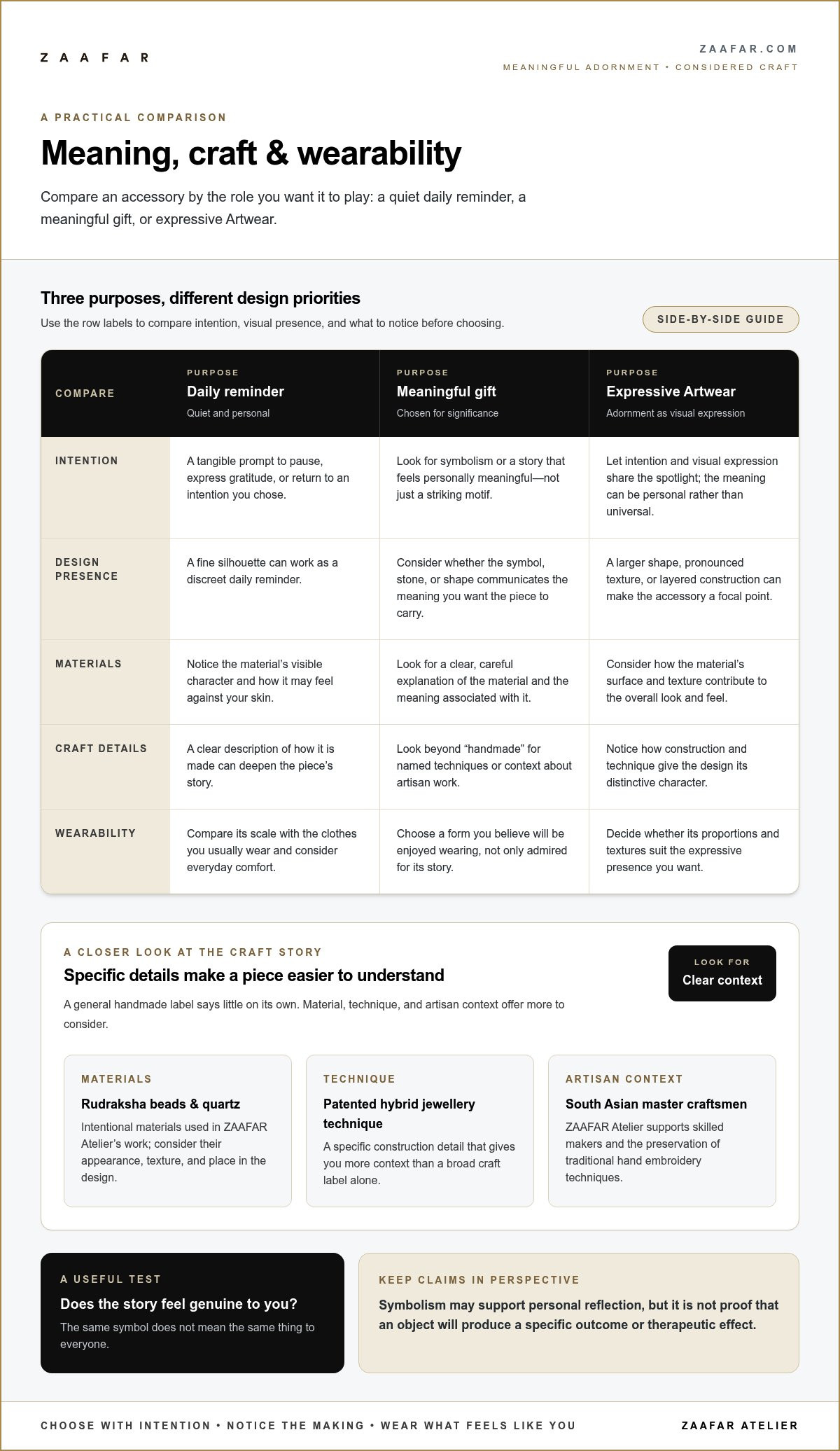
How to choose designer spiritual accessories for your intention and daily life
A thoughtful choice begins with what you want the accessory to mean in your life, then moves to form, craft, and wear. This keeps the decision personal rather than trend-led. Use the steps below to compare options against your values and wardrobe, whether you’re choosing a quiet reminder, a meaningful gift, or expressive Artwear.
Start with the intention, not a trend
Before browsing, name the feeling or value you want the piece to represent. It could be gratitude, a sense of connection, or a reminder to make space for reflection. The intention can be private and simple. It doesn’t need to follow a prescribed spiritual meaning, and wearing an accessory can’t guarantee protection, healing, or a particular result.
If you’re choosing a gift, consider what the recipient values and how they express their style. A symbol that feels meaningful to you may not carry the same meaning for someone else. For a deeper exploration of purposeful adornment, read this mindfulness jewellery guide.
Match the piece to how you want to wear it
Choose a form that suits the role you have in mind. A bracelet, necklace, or ring can become part of a daily routine, while expressive jewellery or Artwear may suit a look you want to make more distinctive. Imagine the piece with clothes you already own. Consider its scale, visual presence, comfort, and the occasions when you’d reach for it.
Then read the description closely. Look for a clear link between the stated intention, the design, and the craft details. Consider whether the materials and techniques align with your values, and whether any care guidance is practical for how you plan to wear the piece. For a focused example of symbolic bracelet design, explore the copper talisman bracelet guide.
- Name an intention. Choose a feeling, value, or memory you want the accessory to call to mind.
- Choose a form. Decide whether you’re looking for a quiet reminder, a gift, or a more expressive piece of Artwear.
- Assess the craft. Look for meaningful context about materials and technique, rather than relying only on broad claims.
- Consider wear. Picture the accessory in your routine and wardrobe, and review any care information supplied for that piece.
The best choice brings intention, design, and practical wear into balance for you. Explore ZAAFAR Atelier’s spiritual jewellery and Artwear as you consider which form feels most at home in your life.
Discover ZAAFAR Atelier's designer spiritual accessories and Artwear
For ZAAFAR Atelier, an accessory can hold more than visual appeal. Founded and designed by Saadia Zaafar, the brand is based in Hamburg and Pakistan and brings spiritual intention to handmade jewellery and Artwear. Its pieces are designed as reminders of gratitude, inviting the wearer to make meaning personal rather than promising a particular spiritual or physical result.
A distinctive approach to spiritual design
The brand’s hybrid jewellery uses a patented technique, bringing a distinctive approach to adornment and design. This sits alongside a broader Artwear perspective, where jewellery and wearable art meet. The aim is not to prescribe what a symbol must mean, but to create pieces with a clear intention that wearers can interpret in their own way.
Materials such as Rudraksha beads and quartz form part of this approach. Consider their place in a design through appearance, texture, and the meaning you personally associate with them. A material doesn’t guarantee an outcome; its value may lie in how it helps you pause, remember, or express an intention. A gratitude reminder can be quiet and intimate, or take shape in a more visually distinctive design.
ZAAFAR Atelier’s designer spiritual accessories bring symbolism and aesthetic character together. As you browse, consider whether the stated intention resonates with you, whether the design fits your style, and whether the description gives useful context about its making.
Craft, intention, and a considered next step
Craft is part of the brand’s story, too. ZAAFAR Atelier supports South Asian master craftsmen and the preservation of traditional hand embroidery techniques. These details give a more specific picture of the people and practices connected to the work than a general description of an accessory as handmade. They also invite appreciation for skill and continuity in craft, without reducing a tradition to a decorative trend.
Bring your own priorities as you explore. Consider the meaning you want a piece to hold, the materials and techniques that matter to you, and how comfortably its form could fit into your wardrobe and routine. If you’re drawn to expressive Artwear, think about how you’d like it to shape a look. If you prefer everyday jewellery, consider what would make it feel natural to wear.
Let the choice remain personal. Explore ZAAFAR Atelier’s spiritual jewellery and Artwear and discover a piece whose intention, craft, and design feel meaningful to you.
Let meaning guide your next choice
Begin with a question: what would you like this accessory to bring to mind when you wear it? A moment of gratitude, a personal value, or simply a feeling of being more fully yourself can offer a meaningful direction. From there, notice which design feels natural in your life, not only compelling in a photograph.
That balance is at the heart of ZAAFAR Atelier, founded and designed by Saadia Zaafar. Its hybrid jewellery combines a patented technique with an intention of gratitude, while South Asian master craftsmanship and traditional hand embroidery give the work a rich craft context. These details can inform your choice, but the meaning remains yours to define.
Designer spiritual accessories need not make grand promises to matter. A piece can become significant through the attention you give it and the way it accompanies your everyday rituals. Explore the designs and choose a piece whose intention, craft, and design resonate with you: Explore designer spiritual accessories by ZAAFAR Atelier.
Frequently Asked Questions
Are designer spiritual accessories only for people who follow a particular religion?
No. Some pieces draw on religious traditions, while others may hold meaning through a personal value, memory, or practice. A wearer might choose an accessory as a reminder to be grateful without belonging to a particular faith. If a design uses a tradition-specific symbol, learn about its context rather than assuming it carries the same meaning for everyone. Your own connection can be meaningful, too.
Can I wear spiritual accessories inspired by traditions outside my own?
Yes, with thought and respect. Begin by learning what the symbol or practice means within its tradition, and consider whether it has sacred or ceremonial significance. Avoid treating culturally specific imagery as a costume or a passing motif. A design with clear context and a respectful connection to its inspiration can help you appreciate its meaning without claiming an identity or belief that isn’t yours.
How can I tell whether a spiritual accessory is genuinely handmade?
Look for concrete information about how the piece is made, such as named techniques, hand-finishing details, or an account of the maker’s role. Close-up images may help you notice construction, but small variations alone don’t prove that an item is handmade. A general label is less informative than a clear description of the process. Treat transparency about craft as useful evidence, not a guarantee based on appearance alone.
Are gemstones in spiritual jewellery proven to heal or protect the wearer?
No reliable scientific evidence establishes that gemstones heal or physically protect the person wearing them. A stone may still matter for its beauty, cultural associations, or the private meaning you give it. Keep those forms of significance distinct from medical claims. If you have a health concern, consult a qualified healthcare professional rather than relying on jewellery or a gemstone as treatment.
How do I choose a designer spiritual accessory as a meaningful gift?
Start with what the recipient actually enjoys wearing: the jewellery they reach for, colours they prefer, and whether they favor discreet details or expressive pieces. Choose symbolism that fits their known interests or beliefs, rather than assigning them a meaning they may not share. Designer spiritual accessories can make thoughtful gifts when the design feels personal and wearable. A short note explaining why you chose it can add warmth without defining what it must mean.
Can Artwear be styled with everyday clothing?
Yes. Try letting one Artwear piece lead the outfit, then keep other elements simple so the overall look feels balanced. A clean-lined top or understated layers can give an expressive accessory room to stand out; repeating one colour from the piece elsewhere can bring the look together. Consider your plans and comfort, too. Everyday styling doesn’t require a special occasion, only a way of wearing the piece that feels like you.